THE RISING TIDE OF SPORTS INJURIES IN INDIA
India is experiencing a sports and fitness revolution — but it is one that comes with an enormous and rapidly growing injury burden. A nation that historically concentrated its sporting passion in cricket has, over the past decade, diversified into football, badminton, kabaddi, athletics, wrestling, and increasingly, gym-based fitness training. This shift has created an entirely new epidemiology of musculoskeletal injury that the country's healthcare system is only beginning to reckon with.
48.5% overall sports injury prevalence among competitive athletes in India (Cureus, 2025) | 61.3% of sports injuries involve the lower limb — knee, ankle, hamstring | USD 278M India sports medicine market in 2024 (Grand View Research) | 9.4% CAGR projected growth 2025–2033, reaching USD 620M+ |
A 2025 cross-sectional study published in Cureus (Chowdhery et al., 2025), conducted across five sports academies in Lucknow covering cricket, football, athletics, and wrestling, found an overall injury prevalence of 48.5% among athletes. Contact sports led the burden — football at 64% and wrestling at 58%. Lower limb injuries accounted for 61.3% of all presentations, with knee sprains, ankle sprains, and hamstring strains predominating. Critically, the study identified inadequate warm-up routines, insufficient rest periods, and lack of access to sports medicine facilities as the primary contributing factors — all of which Ayurvedic medicine is uniquely positioned to address.
Chowdhery A, Agarwal A, Saini A. Prevalence of Sports Injuries Among Athletes in the Lucknow Region: A Cross-Sectional Study. Cureus. 2025 Aug 17;17(8):e90266. doi: 10.7759/cureus.90266. PMID: 40964569; PMCID: PMC12438999.
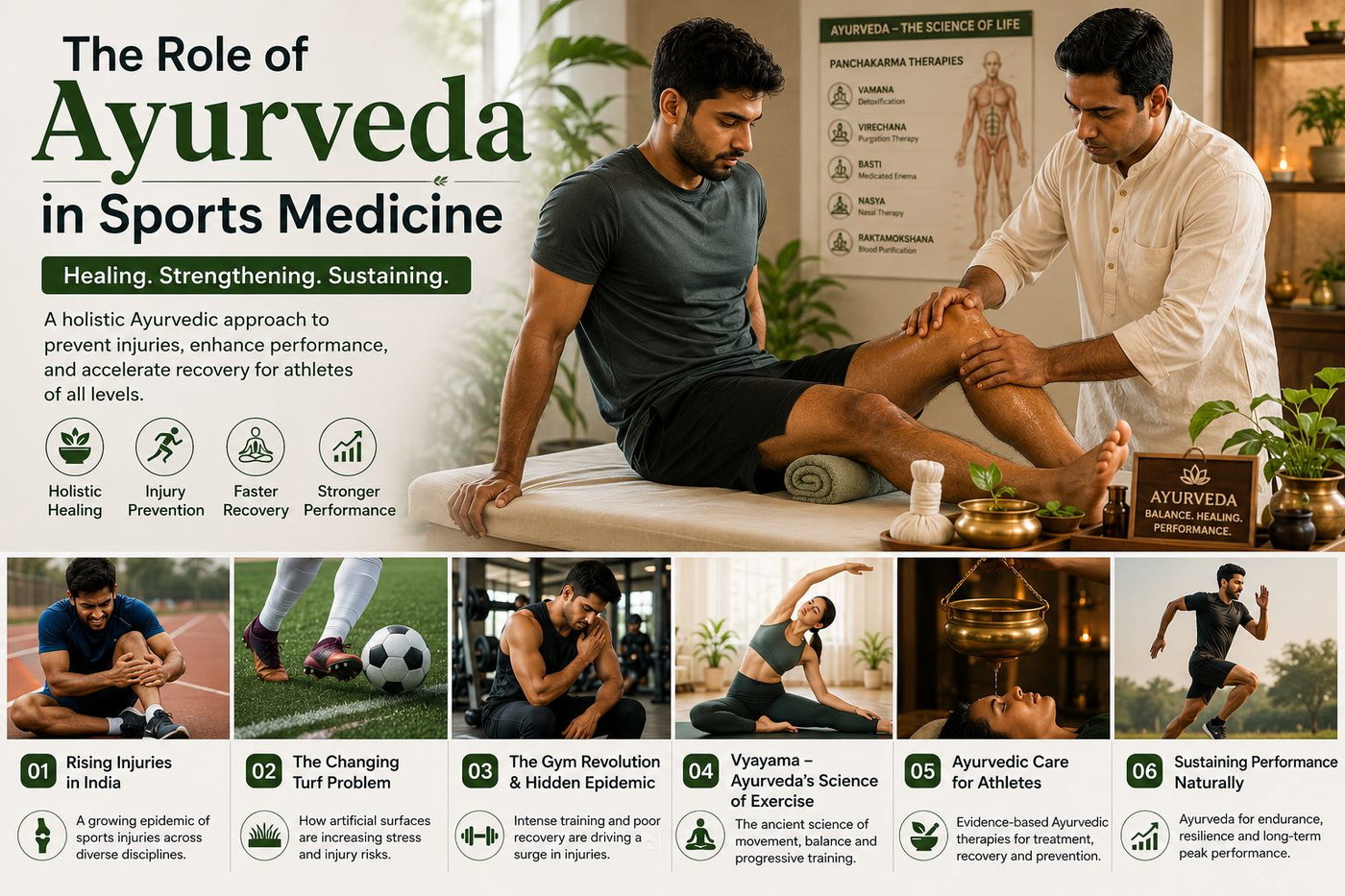
The Changing Turf Problem
One of the most consequential yet underappreciated drivers of sports injury in India is the rapid transition from natural grass to artificial turf surfaces in football grounds, cricket training nets, and multi-purpose indoor sports facilities. This change, driven by cost, maintenance ease, and durability, has had a measurable impact on injury patterns.
A comprehensive systematic review published in the American Journal of Sports Medicine (Gould et al., 2023) examining injury rates across all sports on artificial versus natural grass found that foot and ankle injuries occur at consistently higher rates on artificial turf across both old-generation and new-generation surfaces. The rate of ankle sprains on artificial turf has been reported at 1.5 injuries per 1,000 hours of play — nearly double the 0.8 per 1,000 hours on natural grass. For professional male soccer players, the rate of Achilles tendon injuries was found to be twice as high on turf, and ankle fracture rates were six times higher on turf compared to natural grass. PCL tears occurred almost three times more frequently on turf in NCAA football players.
The biomechanical reason is clear: artificial turf generates greater friction and altered cleat-surface interaction, transmitting higher rotational torque forces to the lower limb joints — particularly the ankle, knee, and Achilles tendon. For an Ayurvedic sports medicine practitioner, this has direct clinical implications: the presenting patterns of injury in athletes who train on artificial surfaces differ significantly from those on grass, requiring specific assessment and management protocols.
Gould HP, Lostetter SJ, Samuelson ER, Guyton GP. Lower Extremity Injury Rates on Artificial Turf Versus Natural Grass Playing Surfaces: A Systematic Review. Am J Sports Med. 2023;51(6):1615-1621.
National Center for Health Research. Injuries Related to Artificial Turf. Updated 2023.
The Gym Revolution and Its Hidden Injury Epidemic
India's gym and fitness industry has grown dramatically over the past decade, fuelled by social media fitness culture, the explosion of commercial gym chains, and post-pandemic health consciousness. What has grown alongside it, largely unacknowledged, is an epidemic of training-related injuries among individuals who begin intense exercise routines without adequate guidance, progressive loading, or recovery protocols.
The commonest presentations include acute overuse injuries — tendinitis, stress fractures, rotator cuff strains, and lumbar disc injuries — resulting from sudden increases in training volume and intensity. The 10% rule is well established in sports medicine: training load should not increase by more than 10% per week. Violations of this principle are among the leading causes of overuse injury. More alarmingly, exertional rhabdomyolysis — a potentially life-threatening condition in which muscle cell death releases myoglobin into the bloodstream, causing acute kidney injury — is increasingly being reported in young gym-goers and spin class participants. A case report from Cureus (Kumar et al., 2022) documented a 26-year-old male presenting to emergency with exertional rhabdomyolysis requiring haemodialysis after vigorous gym training. Between 10 and 30% of exertional rhabdomyolysis cases progress to acute kidney injury.
These presentations — which are not sports injuries in the traditional sense but are directly related to unstructured physical training — represent a growing clinical population that urgently needs the kind of integrated pre- and post-exercise care that Ayurveda offers through its science of Vyayama.
Kumar R, Kumar S, Kumar A, Kumar D, Kumar V. Exercise-Induced Rhabdomyolysis Causing Acute Kidney Injury: A Potential Threat to Gym Lovers. Cureus. 2022 Aug 15;14(8):e28046. doi: 10.7759/cureus.28046. PMID: 36127953; PMCID: PMC9477545
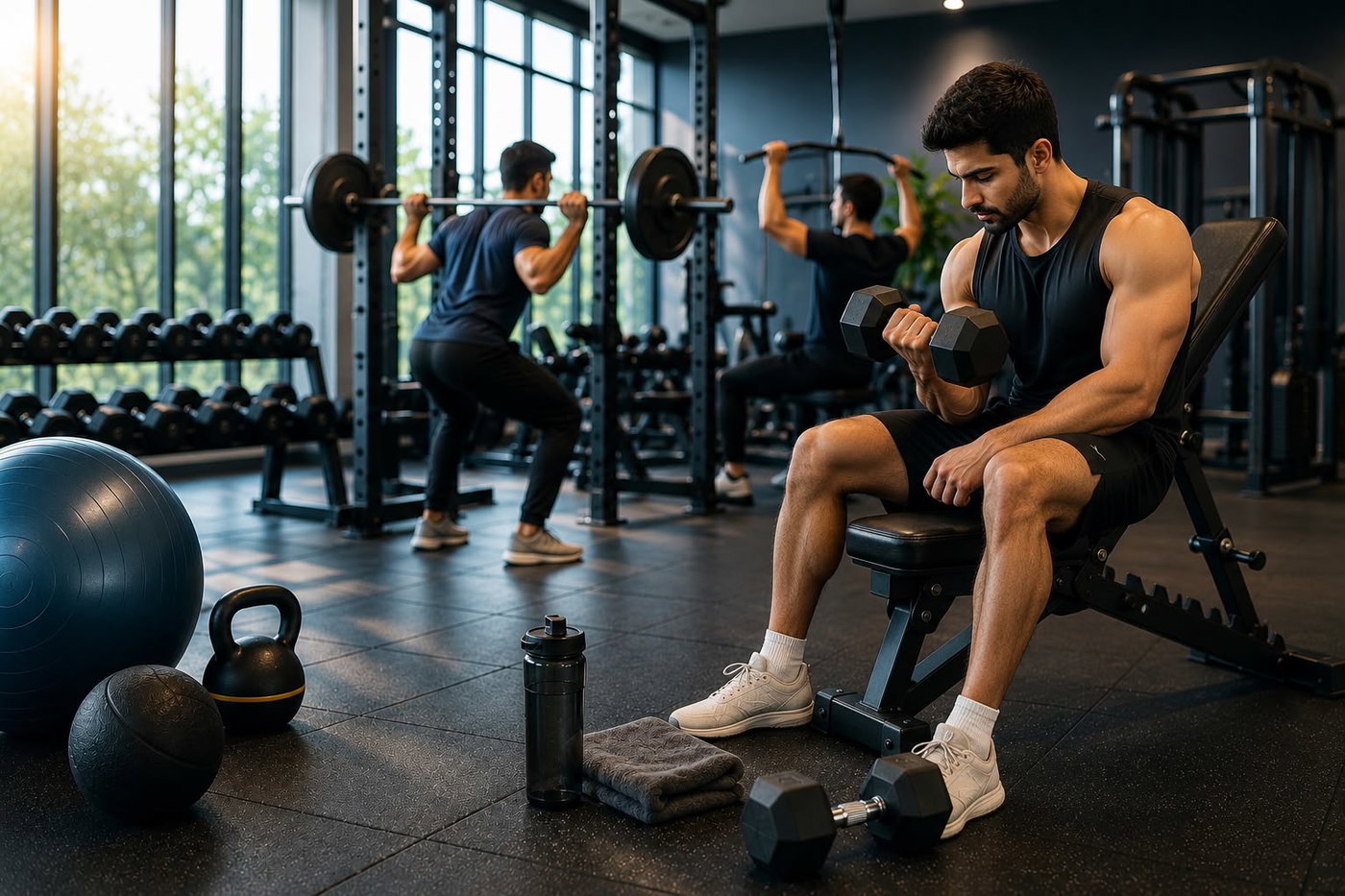
VYAYAMA — AYURVEDA'S SCIENCE OF EXERCISE
The Ayurvedic concept of Vyayama — systematic physical exercise — is one of the most sophisticated exercise science frameworks in any traditional medical system. Far from being a vague exhortation to 'be active,' the classical texts provide a detailed and clinically actionable science of exercise physiology that has remarkable resonance with modern sports medicine
Definitions and Classical Context
Acharya Sushruta defines Vyayama in Sushruta Samhita, Chikilsa Sthana 24/38: 'Shareerayasa karanam karma Vyayama uchyate' — any physical action capable of bringing about bodily stability and strength, to be practised in moderation, is called Vyayama. This definition anticipates modern principles of progressive overload and specificity of training.
Acharya Sushruta in Sushruta Samhita, Chikitsa Sthana 24 elaborates further: Vyayama should be taken every day. After exercise, the whole body should be massaged until a comfortable sensation is felt in the limbs. It makes the body stout and strong, ensures symmetrical growth of limbs and muscles, improves complexion and digestive capacity, and prevents laziness. This prescription for post-exercise massage anticipates the modern evidence base for massage therapy in recovery from exercise-induced muscle damage.
Ashtanga Hridayam (Sutra Sthana 2/10-11) by Vagbhata and Sushrutha samhita, prescribes Vyayama as part of Dinacharya (daily regimen), specifying both the indication and the critical concept of Ardha Shakti — the rule of half capacity. Exercise should be taken only up to half one's maximum exertion (bala). Exceeding Ardha Shakti leads to Ativyayama (overexertion), which the classical texts describe as causing Ajirna (indigestion), Kshaya (tissue depletion), Thrishna (thirst), Shwasa (breathlessness), and even Raktapitta (haemorrhagic conditions) — a classical description of symptoms remarkably consistent with modern understanding of overtraining syndrome and exertional rhabdomyolysis.
Sushruta Samhita, Chikitsa Sthana 24/38. Sushruta Samhita (Nibandhasangraha commentary of Dalhana). Chaukhamba Sanskrit Pratishthan.
Sushruta Samhita, Chikitsa Sthana 24/47-51. Sushruta Samhita (Nibandhasangraha commentary of Dalhana). Chaukhamba Sanskrit Pratishthan.
Ashtanga Hridayam, Sutra Sthana 2/10-11. Vagbhata. Chaukhamba Sanskrit Series, Varanasi.
Purvakarma — Pre-Exercise Care in Ayurveda
Classical Ayurveda prescribes specific pre-exercise protocols that align closely with modern sports medicine principles of warm-up and preparation. Abhyanga (oil massage) before exercise is specifically recommended in Ashtanga Hridayam to enhance pliability of muscles and joints, improve circulation, and reduce the risk of injury — a practice with growing scientific support in the literature on massage therapy and sports performance.
Snehana (oleation) of the major joints — particularly the knees, ankles, and hip — before training corresponds to modern lubrication and warm-up protocols for joint protection. Acharya Charaka's concept of appropriate Ahara (nutritional preparation) before exercise, including the avoidance of Guru (heavy) foods before exertion, maps onto contemporary sports nutrition protocols for pre-training meal composition and timing.
Prakriti-based assessment — evaluating whether an individual is Vata, Pitta, or Kapha dominant before prescribing a training regimen — represents an individualised approach to exercise prescription that is centuries ahead of modern thinking on phenotype-based exercise prescription.
Paschat Karma — Post-Exercise Recovery in Ayurveda
Sushruta's prescription for full-body massage after exercise until the body feels comfortable is the classical prescription for post-exercise recovery. The Ayurvedic understanding of post-exercise Vata aggravation — manifest as muscle soreness, joint stiffness, and fatigue — and its management through Snehana (oil application), Svedana (sudation), and appropriate Ahara (diet) constitutes a complete evidence-informed recovery system. Specific formulations such as Mahanarayana Taila and Dhanwantaram Taila applied in post-exercise massage have known anti-inflammatory and analgesic properties that directly support muscle recovery.
The concept of Vishrama (adequate rest and recovery) as an essential component of Vyayama is spelled out explicitly in Ashtanga Hridayam — an anticipation of the modern principle that adaptation and muscle growth occur during recovery, not during exercise itself. This Ayurvedic framework for recovery is directly applicable in both elite sports training and general gym-based fitness.
Ashtanga Hridayam, Sutra Sthana 2/11-14. Vagbhata. Edited with Sarvangasundara and Ayurvedarasayana commentaries. Krishnadas Academy, Varanasi.
HOW AYURVEDA UNDERSTANDS SPORTS INJURIES
Ayurveda does not have a discrete category labelled 'sports injuries,' but its classical texts contain an extensive and clinically detailed body of knowledge on traumatic and overuse injuries that maps precisely onto the conditions seen in modern sports medicine practice. The primary classical correlates are:
Bhagna — Fractures and Structural Injuries
Acharya Sushruta's Bhagna Chikitsa Adhyaya (Chikitsa Sthana, Chapter 3) is among the most detailed classical treatments of fracture management in any traditional medical system. Sushruta classifies fractures (Bhagna) and dislocations (Sandhimukta) systematically, describes the principles of reduction (Sammurchhana), immobilisation (Bandhana), and rehabilitation — a framework that parallels modern orthopaedic management. For fracture healing, classical texts recommend herbs such as Asthi Shruankhala (Cissus quadrangularis — whose osteogenic and fracture-healing properties are now extensively evidenced in peer-reviewed literature), Guggulu (Commiphora mukul), Manjishtha (Rubia cordifolia), Yashtimadhu (Glycyrrhiza glabra), and Shilajatu (bitumen) — whose mineral composition supports bone matrix regeneration.
Sushruta Samhita, Chikitsa Sthana 3/34-35. Bhagna Chikitsa. Chaukhamba Surbharati Prakashan, Varanasi.
Harish Kumar et al. Cissus quadrangularis: A review of its phytochemical and pharmacological properties. Int J Res Ayurveda Pharm. 2010;1(2):330-337.
Marma Abhighata — Vital Point Injuries
The Ayurvedic science of Marma — 107 vital anatomical points described in Sushruta Samhita, Sharira Sthana, Chapter 6 — provides one of the most sophisticated injury classification systems in any traditional medicine. Marmas are classified by the severity of their vulnerability: Sadyahpranahara (immediately fatal if injured), Kalantarapranahara (fatal after a period), Vishalyaghna (fatal if foreign body removed), Vaikalyakara (causing permanent deformity), and Rujakara (causing severe pain).
In the context of sports injuries, Rujakara and Vaikalyakara Marmas are directly relevant. An injury to Janu Marma (knee), Kurpara Marma (elbow), Kakshadhara Marma (shoulder), Vitapa Marma (groin), or Gulpha Marma (ankle) can result in persistent pain, functional limitation, or permanent impairment if not properly assessed and managed. The clinical relevance of Marma science in sports medicine lies in its ability to guide targeted intervention — Marma-specific massage, pressure therapy, and Agnikarma — for injury sites that modern physiotherapy may reach only indirectly.
Sushruta Samhita, Sharira Sthana 6/3-15. Marma Vibhaga Sharira. Chaukhamba Sanskrit Pratishthan, Varanasi.
Snayugata Vata — Ligament and Tendon Injuries
Vata imbalance in the Snayu (ligaments and tendons) — described in detail by Charaka and Vagbhata — corresponds closely to the clinical picture of ligament sprains, ACL/PCL tears, rotator cuff injuries, and tendinitis seen in modern sports medicine. The management principles — local Snehana, Svedana, Basti, and specific oral formulations to address both the acute inflammatory phase and the chronic repair and remodelling phases of ligament healing.
Sandhi Shula and Asthi-Majja Conditions
Overuse joint injuries in sports — patellofemoral pain syndrome, medial tibial stress syndrome (shin splints), stress fractures, and early osteoarthritis — are understood through the lens of Asthi-Majja Dhatu Kshaya (depletion of bone and marrow tissue) combined with Vata aggravation. This framework guides the use of Rasayana therapies alongside dietary and lifestyle interventions to restore tissue integrity. Notably, Ashwagandha's adaptogenic and anabolic properties, now well-evidenced in clinical trials, make it directly relevant for sports recovery and performance enhancement.
Wankhede S et al. Examining the effect of Withania somnifera supplementation on muscle strength and recovery. J Int Soc Sports Nutr. 2015;12:43.
WHO IS DRIVING DEMAND? THE KEY PATIENT POPULATIONS
The demand for sports medicine and orthopaedic rehabilitation services comes from several distinct and growing patient groups:
Professional and semi-professional athletes across cricket, football, badminton, kabaddi, athletics, and combat sports — with India's growing sports ecosystem generating increasing volumes of training-related and competition injuries.
Recreational fitness enthusiasts — gym-goers, runners, cyclists, yoga practitioners, and CrossFit participants — who sustain musculoskeletal injuries that require specialised rehabilitation.
Children and young adults participating in school and college sports, where injury prevention and early rehabilitation are critical for long-term athletic development.
Working-age adults with occupational musculoskeletal disorders — back pain, repetitive strain injuries, and postural syndromes — a population that is massive in both the informal labour sector and white-collar IT workforce.
Post-surgical orthopaedic patients requiring structured rehabilitation following fracture fixation, joint replacement, ligament reconstruction, and arthroscopic procedures.
Elderly patients with osteoarthritis, osteoporosis-related fractures, and degenerative joint disease — a demographic that will more than double in size by 2050 as India ages.
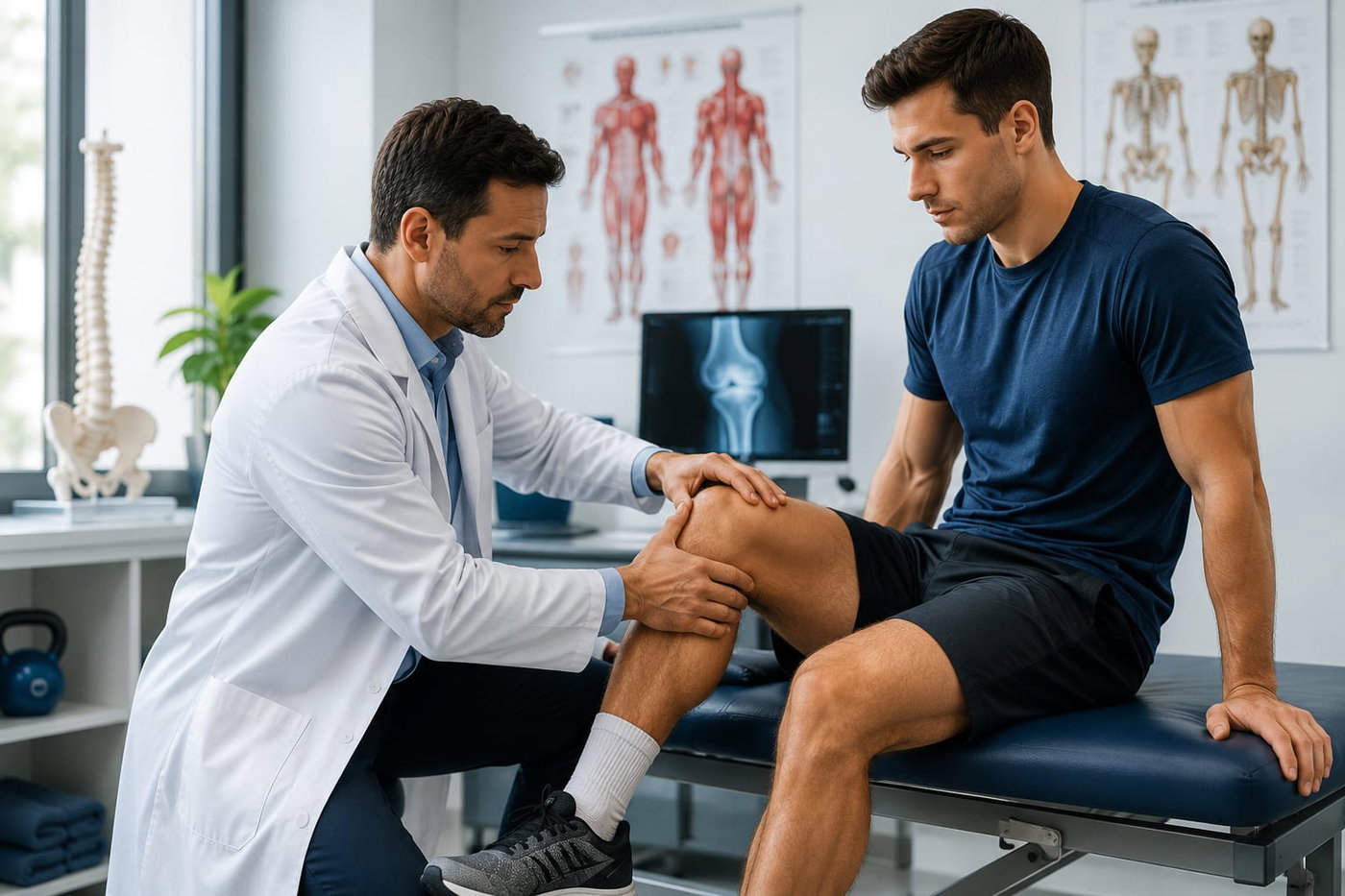
AYURVEDIC TREATMENT MODALITIES IN SPORTS MEDICINE
Ayurveda offers a comprehensive suite of therapeutic interventions for sports injuries — covering acute management, rehabilitation, and performance recovery. These are not alternatives to modern medicine; they are powerful complements that address dimensions of healing that conventional physiotherapy and pharmacology cannot.
External Therapies
Abhyanga (medicated oil massage): The cornerstone of Ayurvedic sports injury management. Specific oils — Mahanarayana Taila, Dhanwantaram Taila, Murivenna — have established anti-inflammatory, analgesic, and tissue-regenerating properties. Post-exercise Abhyanga reduces DOMS (Delayed Onset Muscle Soreness) and accelerates recovery.
Kati Basti, Janu Basti, Greeva Basti: Localised medicated oil pooling over the lumbar spine, knee joint, and cervical spine respectively — providing sustained deep tissue oleation and anti-inflammatory action for focal joint and disc injuries. Highly effective in lumbar disc disease, knee ligament injuries, and cervical spondylosis.
Navarakizhi (Shashtika Shali Pinda Sveda): Warm rice-bolus massage with medicated decoctions — a uniquely powerful Keraliya modality for muscle wasting, nerve injuries, and rehabilitation after fractures. Evidence supports its efficacy in improving muscle strength and joint mobility.
Pizhichil (Taila Dhara): Continuous stream of warm medicated oil over the body — deeply effective for Vata-dominant neurological and musculoskeletal conditions, including post-injury nerve damage and muscle contractures.
Lepa (medicated poultice): Classical external applications using formulations such as Nagaradi, Jadamayadi for acute swelling, haematoma, and ligament sprains — providing rapid anti-inflammatory action analogous to modern cryotherapy and topical NSAIDs.
Bandhana (bandaging): Sushruta describes 15 types of Vrana Bandhana (wound dressing) in detail — providing a classical framework for immobilisation, compression, and wound management in sports injuries.
Para-Surgical Procedures
Agnikarma (thermal cauterisation): A minimally invasive Ayurvedic procedure using controlled heat application to specific Marma points and pain sites — clinically validated for chronic joint pain, tendinitis, plantar fasciitis, and osteoarthritis. Agnikarma is one of the most evidence-supported Ayurvedic procedures in the modern literature.
Raktamokshana (controlled bloodletting): Jaluka (leech therapy) and Siravyadhana (venepuncture) are classically indicated for inflammatory joint conditions, haematoma, and conditions with Pitta aggravation. Leech therapy in particular has a substantial modern evidence base for osteoarthritis, acute joint swelling, and soft tissue inflammation.
Goud D, Killedar RS, S SP, Bagewadi D. Efficacy of integrated protocol in the management of ankle sprain in sports injuries - A randomized controlled clinical trial. J Ayurveda Integr Med. 2025 May-Jun;16(3):101132. doi: 10.1016/j.jaim.2025.101132. Epub 2025 Jun 2. PMID: 40460661; PMCID: PMC12166993.
Dhillon MS et al. Beyond the boundary: a bibliometric analysis of published research on injuries in cricket. Indian J Orthop. 2023;57:1575-83.
INTEGRATING AYURVEDA WITH MODERN SPORTS MEDICINE
Modern orthopaedics contributes radiological diagnosis (X-ray, CT, MRI — essential for fracture classification, ligament tear grading, and surgical planning), physical medicine modalities (IFT, TENS, ultrasound therapy, traction), and evidence-based physiotherapy. Ayurveda contributes a framework for individualised risk assessment (Prakriti, Bala), a rich pharmacopoeia of topical and oral medications with established safety profiles, and uniquely effective manual and procedural therapies such as Marma treatment and Agnikarma. Right now in the 21st century what we need is a integrative approach — drawing on the procedural and diagnostic strengths of modern orthopaedics while incorporating the holistic, tissue-nurturing interventions of Ayurveda. This is not a theoretical framework; it is already being practised in leading Ayurvedic hospitals, sports medicine centres, and rehabilitation facilities.
A pivotal 2025 randomised controlled clinical trial published in the Journal of Ayurveda and Integrative Medicine (Goud, Killedar et al., 2025) demonstrated the efficacy of an integrated Ayurvedic protocol in the management of ankle sprains in sports injuries — directly validating the integrative approach.
Physiotherapy occupies a particularly natural bridge point between the two systems, since both share a fundamentally biomechanical and functional-restoration orientation, even though their underlying models differ.
Recent case-based work has documented structured integration of physiotherapy techniques — therapeutic exercise, mobilisation, and electrotherapy — with classical Ayurvedic interventions such as Snehana, Swedana, and targeted Basti in conditions like sciatica, with the two systems addressing complementary aspects of the same pathology (physiotherapy restoring range of motion and neuromuscular control, Ayurveda addressing the underlying Vata vitiation and tissue nourishment). A recent commentary in the Indian Journal of Physical Therapy and Research (2025) specifically explored this integration model as a distinct area worth formalising within physiotherapy education and practice.
Exploring the Integration of Ayurveda and Physiotherapy. Indian J Physical Therapy Res. 2025;7(1):4–6.
Ayurvedic sports medicine is not about replacing the orthopaedic surgeon or the physiotherapist. It is about giving patients a more complete healing journey — one that addresses not just the structural injury but also the tissue environment, the constitutional vulnerability, and the systemic recovery that modern interventions alone cannot fully provide. |
CAREER SCOPE & PROFESSIONAL OPPORTUNITIES
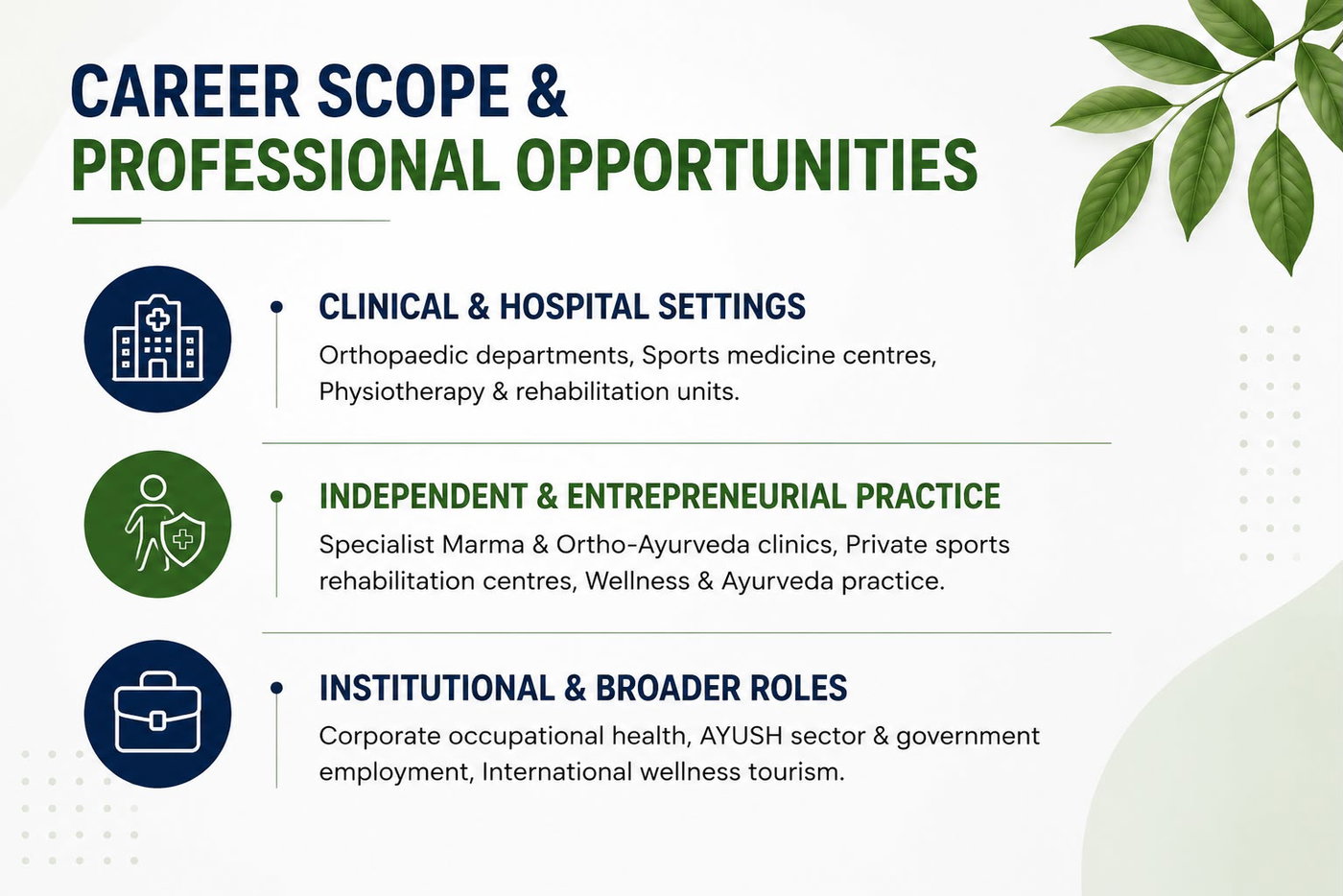
Career opportunities for an Ayurvedic sports medicine practitioner span:
Clinical & Hospital Settings
Orthopaedic Department Consultant: Work within orthopaedic departments in multi-specialty and standalone orthopaedic hospitals as an Ayurvedic rehabilitation specialist — designing and implementing post-surgical recovery programmes, managing conservative orthopaedic cases, and integrating Marma and Panchakarma modalities into the rehabilitation pathway.
Sports Medicine Centres & Academies: India's growing ecosystem of professional sports academies, state-level training centres, and private sports medicine facilities provides a rapidly expanding employment base for qualified sports medicine practitioners. Teams across cricket, football, badminton, and athletics increasingly employ dedicated Ayurvedic sports physicians.
Physiotherapy & Rehabilitation Units: Doctors training in physical medicine modalities — IFT, TENS, ultrasound therapy, traction, and kinesiology taping — graduates are equipped to function effectively within physiotherapy departments, adding Ayurvedic value to conventional rehabilitation.
Independent & Entrepreneurial Practice
Specialist Marma & Ortho-Ayurveda Clinic: Practitioners trained in both Marma therapy and modern orthopaedics are positioned to establish highly differentiated independent clinics targeting athletes, elderly patients, and working professionals with musculoskeletal conditions. This is one of the most viable niche practice models in contemporary Ayurveda.
International Wellness Tourism: Kerala is already the world capital of Ayurvedic wellness tourism, and orthopaedic and rehabilitative Ayurveda is among the most requested service categories by international visitors from Europe, the Middle East, and North America. Practitioners with NSDC certification and hospital-based credentials command premium placements.
Institutional & Broader Roles
Corporate Occupational Health: IT companies, manufacturing firms, and construction organisations face massive musculoskeletal morbidity burdens — back pain, repetitive strain, and postural syndromes. Practitioners trained in orthopaedic assessment and rehabilitation are increasingly engaged to design workplace ergonomics programmes and manage occupational musculoskeletal injuries.
AYUSH Sector & Government Employment: AYUSH orthopaedic specialists are in demand in government hospitals, Community Health Centres, and district hospitals under the NHM, where musculoskeletal disorders represent a significant proportion of outpatient load.
THE PROFESSIONAL DIPLOMA IN ORTHOPAEDICS AND SPORTS MEDICINE REHABILITATION (PDOSMR)
The Professional Diploma in Orthopaedics & Sports Medicine Rehabilitation (PDOSMR) from MedMap Medical Services is a 6-month hospital-based program offered at Daisman Hospital, Kondotty — providing BAMS graduates with hands-on clinical training at the intersection of Ayurveda, modern orthopaedics, and sports medicine.
The program is NSDC-certified and combines classical Ayurvedic wisdom on Marma and Asthi-Majja systems with contemporary physiotherapy, radiological diagnostics, and rehabilitation techniques — making graduates competent to manage both acute sports injuries and chronic musculoskeletal conditions.
COURSE SNAPSHOT
Detail | Information |
Course Name | Professional Diploma in Orthopaedics & Sports Medicine Rehabilitation (PDOSMR) |
Duration | 6 Months |
Mode | Hospital-Based Clinical Training — Daisman Hospital, Kondotty |
Accreditation | NSDC Certified |
Eligibility | BAMS Graduates |
Clinical Competencies | Marma therapy; MSK assessment; X-ray/CT/MRI interpretation; IFT, TENS, Ultrasound; POP/Fiber casting; Kinesiology taping; Agnikarma; Biomechanics |
Career Pathways | Sports medicine centres; Orthopaedic hospitals; Independent Marma clinic; Corporate health; International wellness; AYUSH sector |
The PDOSMR programme deliberately integrates classical Ayurvedic approaches with modern physiotherapy tools — IFT, TENS, ultrasound therapy, kinesiology taping, and casting techniques — creating practitioners who can draw from both systems and offer genuinely superior rehabilitation outcomes. |
This article is provided by MEDMAP — a premier institution dedicated to Ayurvedic education that combines classical wisdom with contemporary clinical training. MEDMAP offers a wide range of Ayurvedic courses with hands-on clinical exposure, designed for BAMS graduates and Ayurveda practitioners at every stage of their career. 🌐 For courses, updates, and career resources, follow MEDMAP. 📱 Instagram https://www.instagram.com/ayurvedamap 🌐 Website https://medmapmedical.com |
|---|