WHAT IS PANCHAKARMA?
Panchakarma — literally 'five actions' — is the crown jewel of Ayurvedic therapeutic science. It is a systematic bio-purification and rejuvenation therapy that represents the most clinically sophisticated intervention Ayurveda has to offer. Far from being a simple detoxification ritual, Panchakarma is a carefully sequenced, deeply individualised medical procedure that requires rigorous patient assessment, precise staging, trained administration, and meticulous post-treatment management.
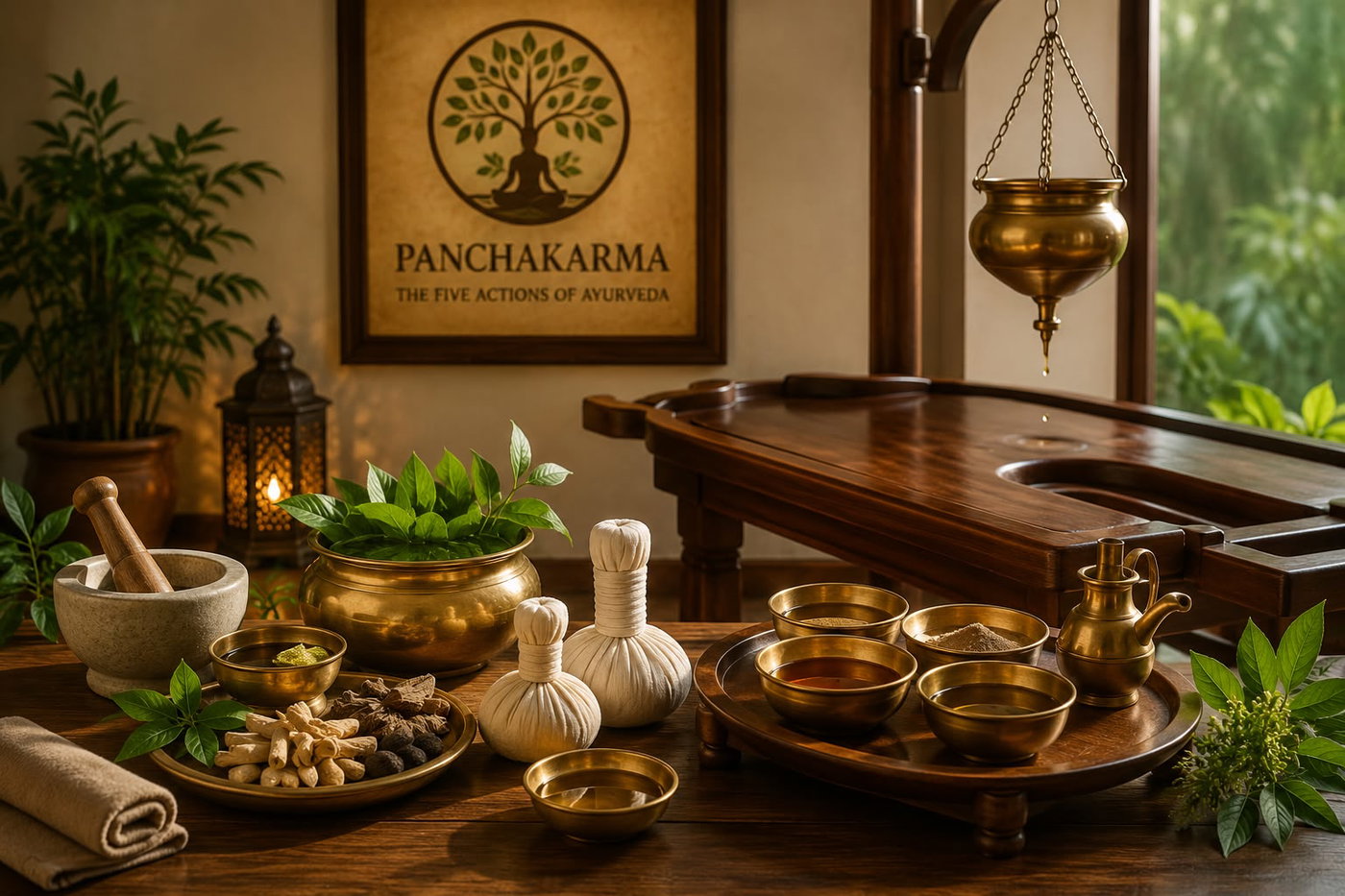
The five primary procedures — Vamana (therapeutic emesis), Virechana (therapeutic purgation), Niruha Basti (medicated enema), Nasya (nasal administration of medicated preparations), and Anuvasana Basti (oil enema) — are collectively called the Pancha Karma, first systematically described in Charaka Samhita, Kalpa Sthana and Siddhi Sthana, and Sushruta Samhita, Chikitsa Sthana. Each procedure is indicated for specific Dosha predominance, disease conditions, and patient constitution — making their administration as much a science as an art.
Charaka Samhita, Siddhi Sthana 1/1-5. Agnivesa's Charaka Samhita. Chaukhamba Sanskrit Pratishthan, Varanasi.
Sushruta Samhita, Chikitsa Sthana 33. Panchakarma Chikitsa. Chaukhamba Sanskrit Pratishthan.
Purvakarma — The Essential Preparation
The single most misunderstood aspect of Panchakarma — and the one most frequently omitted in commercially driven 'wellness' adaptations — is the Purvakarma: the preparatory procedures that are not optional enhancements but essential medical prerequisites for safe and effective Panchakarma administration.
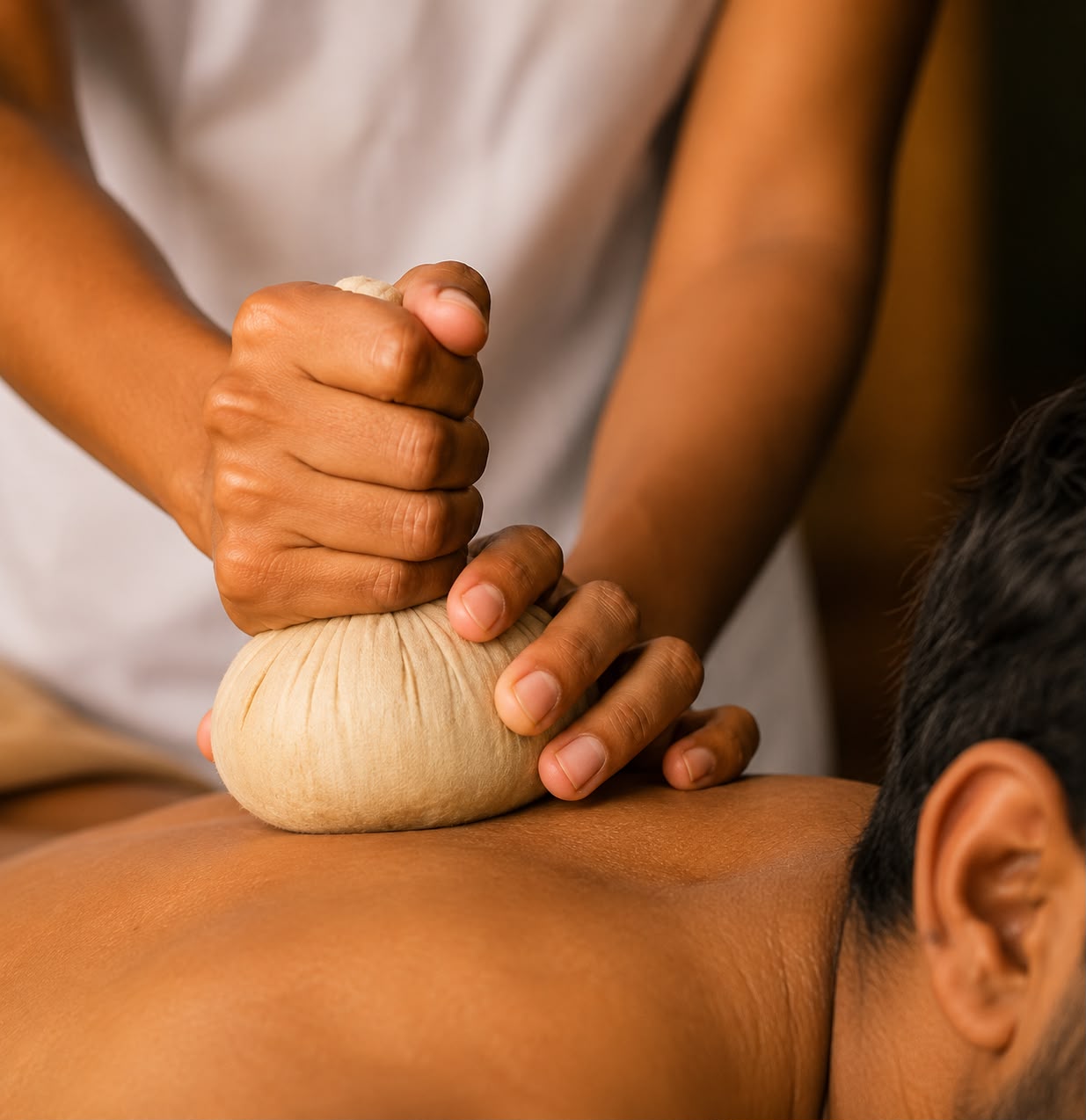
Purvakarma consists of two primary components. Snehana (oleation therapy) — both internal (Antah Snehana, prescribed as Ghrita or Taila in fixed dose or progressively increasing doses over 3 to 7 days) and external (Bahya Snehana, medicated oil massage) — mobilises and loosens the Doshas from their peripheral tissues (Shakha) and channels (Srotas), liquefying them so that they can be efficiently expelled by the subsequent Pradhana Karma. Svedana (sudation therapy) — administered through various methods including Nadisveda (steam), Patra Pinda Sveda (herbal bolus), Shashtika Shali Pinda Sveda (rice bolus) etc, — opens the Srotas, further facilitates Dosha mobilisation, and prepares the body for the cleansing procedure.
Without Purvakarma properly administered, Panchakarma is at best ineffective and at worst unsafe. This critical preparatory phase requires deep clinical knowledge of appropriate Sneha selection, dose titration, and the correct reading of Samyak Snigdha and Swinna Lakshanas — the classical signs of optimal oleation and sudation that signal readiness for the main procedure.
Ashtanga Hridayam, Sutra Sthana 16/1-30. Snehopaga Adhyaya. Vagbhata. Krishnadas Academy, Varanasi.
Charaka Samhita, Siddhi Sthana 1/7-20. Panchakarma Sutra.
Paschat Karma — Post-Procedural Care and Rehabilitation
Equally critical and equally neglected in commercialised Panchakarma is the Paschat Karma — the post-procedural care regime that determines whether the patient actually recovers the health benefits of the cleansing process or suffers relapse and complications. Paschat Karma includes Samsarjana Krama (gradual dietary re-introduction following a prescribed progression from liquid to semi-solid to solid food), Rasayana administration (rejuvenating formulations to replenish and strengthen the tissues now cleared of Ama and Dosha accumulation), and specific Pathya (lifestyle and dietary guidelines) that must be followed for a defined period after each procedure.
The classical texts are unequivocal on this point: a Panchakarma that is not followed by proper Paschat Karma is incomplete medicine. The Samsarjana Krama described in Charaka Samhita Siddhi Sthana is a precisely graduated dietary restoration protocol — beginning with Peya (thin rice gruel), progressing through Vilepi (thick gruel), Akrita Yusha (unspiced pulse soup), Krita Yusha (spiced pulse soup), Akrita Mamsarasa (unseasoned meat soup), and finally Krita Mamsarasa (seasoned meat soup) — reflecting a deep understanding of gastrointestinal recovery that has no equivalent in modern post-procedure care.
Charaka Samhita, Siddhi Sthana 2/1-30. Samsarjana Krama. Chaukhamba Sanskrit Pratishthan, Varanasi.
THE PANCHAKARMA BRAND CRISIS — OPPORTUNITY IN DISGUISE
Panchakarma has a problem that is also its greatest opportunity. Over the past two decades, it has been commercially packaged, diluted, and marketed to a global wellness audience in ways that often bear little resemblance to the classical clinical science described above. From 'Panchakarma packages' at spa hotels that consist of nothing more than a few oil massages and steam baths, to 'detox retreats' that skip Purvakarma entirely, the term Panchakarma has been so heavily capitalised and commercially exploited that both the clinical integrity and the patient outcomes of authentic Panchakarma have been systematically compromised.
There is a profound and widening gap between the global demand for Panchakarma and the supply of practitioners who can actually deliver it at the clinical standard the classical texts demand. This is not a problem to lament — it is the single greatest career opportunity in contemporary Ayurveda for doctors who dare to be genuinely trained. |
The commercial dilution of Panchakarma is a well-recognised concern within the Ayurvedic academic community. Senior practitioners across Kerala, Maharashtra, and Karnataka have documented the growing prevalence of Panchakarma being offered without qualified physicians, without Purvakarma, without proper patient assessment, and without Paschat Karma — essentially selling the aesthetic experience of Ayurveda rather than its clinical efficacy. The consequences include both failed outcomes and, in cases where inappropriate Shodhana has been administered without proper Purvakarma, adverse events.
What this means is that in a market flooded with under-trained Panchakarma 'technicians,' a doctor who understands the full clinical science from Purvakarma through Paschat Karma — is categorically and visibly different from the competition. Discerning patients and hospitals can tell the difference.
THE BOOM IN PATIENTS SEEKING PANCHAKARMA
Despite the challenges of commercial dilution, the fundamental demand for authentic Panchakarma therapy is growing at an extraordinary pace — driven by converging global and domestic trends.
USD 10.36B Ayurvedic market size in 2024, growing at 15.63% CAGR through 2032 | USD 33.11B projected Ayurvedic market size by 2032 (Verified Market Research) | USD 8.5B global Ayurveda hospital market in 2023, projected USD 14.2B by 2032 | 9.8% CAGR global Ayurvedic services market (Consultation + Panchakarma), 2024–2032 |
The global Ayurvedic services market — encompassing consultation, Panchakarma therapy, and rejuvenation therapies — was valued at approximately USD 3.5 billion in 2023 and is projected to reach USD 8.2 billion by 2032 at a CAGR of 9.8% (DataIntelo, 2024). Panchakarma therapy is identified as one of the most crucial segments within this market, driven by its detoxification and rejuvenation reputation, its integration into corporate wellness programmes, and its appeal to international wellness tourists.
The Ayurvedic market more broadly — encompassing products and services — was valued at USD 10.36 billion in 2024 and is projected to reach USD 33.11 billion by 2032 at a CAGR of 15.63% (Verified Market Research, October 2025). The global Ayurveda hospital market is expected to grow from USD 8.5 billion in 2023 to USD 14.2 billion by 2032. These are not niche figures — they represent one of the fastest-growing segments in global healthcare.
In India specifically, the Ministry of AYUSH has identified Panchakarma as a flagship offering in India's medical tourism strategy. The AYUSH sector has received sustained government investment, with dedicated AYUSH wellness centres now mandated in district hospitals under the NHM. Every one of these centres requires a physician with formal Panchakarma training — and the supply of such physicians falls significantly short of the institutional demand.
Verified Market Research. Ayurvedic Market Size, Share, Trends, Analysis & Forecast. Updated October 2025.
DataIntelo. Global Ayurvedic Service Market Report. 2024-2032.
DataIntelo. Global Ayurveda Hospital Market Report. 2024-2032.
Who is Seeking Panchakarma Today?
The patient profile of Panchakarma seekers has shifted substantially from the traditional image of a Kerala patient arriving for seasonal Shodhana. Today's Panchakarma seeker is:
An urban professional in their 30s to 50s with hypertension, dyslipidaemia, or metabolic syndrome — seeking Panchakarma as a structured detoxification and lifestyle reset, often as a complement to their cardiologist's management.
A patient with chronic inflammatory conditions — Rheumatoid arthritis, Psoriasis, Inflammatory bowel disease — who has experienced the limitations of long-term DMARD or biologic therapy and is seeking a disease-modifying Ayurvedic intervention.
An international wellness tourist from Europe, North America, or the Middle East, travelling specifically to Kerala for an authentic multi-week Panchakarma experience — typically paying premium rates and seeking rigorous clinical protocols rather than spa experiences.
A post-COVID patient seeking Panchakarma for long-COVID symptoms — fatigue, brain fog, myalgia, and autonomic dysregulation — an emerging indication that is driving significant new patient volumes.
A patient with neurological conditions — Parkinson's disease, multiple sclerosis, cerebral palsy — who is seeking Panchakarma specifically for the Keraliya speciality procedures (Pizhichil, Navarakizhi, Kizhi) after conventional neurological management has reached its limits.
A corporate executive seeking a week-long Panchakarma retreat as a stress management and performance optimisation intervention — a segment that is growing rapidly as corporate wellness programmes incorporate Ayurvedic detox.
CAREER SCOPE & PROFESSIONAL OPPORTUNITIES
NSDC certification in Advanced Panchakarma is one of the most versatile and commercially valuable qualifications available to a BAMS graduate. The career pathways are extensive and financially rewarding across multiple sectors:
Clinical & Hospital Roles
Panchakarma Department Consultant: Lead the clinical operations of Panchakarma units in NABH-accredited Ayurveda hospitals and multi-speciality wellness hospitals — supervising treatment protocols, training therapists, managing patient outcomes, and overseeing Purvakarma-to-Paschat Karma continuity. This is among the highest-salaried clinical roles available to a BAMS graduate in institutional Ayurveda.
AYUSH Hospital Specialist & Medical Officer: Government AYUSH hospitals, district Panchakarma centres, and NHM-supported wellness facilities represent a growing and stable institutional employment base. Government demand for certified Panchakarma consultants is expanding faster than supply.
Integrative Medicine & Lifestyle Disease Clinics: Urban integrative clinics combining Ayurveda with modern internal medicine for management of diabetes, obesity, autoimmune diseases, and mental health — now one of the fastest-growing healthcare formats in India's tier-1 and tier-2 cities — specifically require Advanced Panchakarma competency.
International Wellness & Medical Tourism
Premium Ayurveda Resorts & Retreat Centres: Kerala, Goa, Coorg, and Himachal Pradesh are home to internationally recognised Ayurveda wellness resorts that attract guests from Europe, North America, and the Gulf. These establishments pay premium remuneration to clinically trained, hospital-credentialed Panchakarma consultants who can deliver authentic, outcomes-focused treatment to discerning international clientele. This is consistently among the highest-paying employment categories for BAMS graduates.
International Deployment — Europe, UK, UAE: Ayurveda treatment centres in Germany, the Netherlands, Switzerland, Austria, and the UAE serve local populations seeking Panchakarma therapies. NSDC certification and hospital-based training credentials are specifically valued for international employment and visa applications in these markets.
Medical Tourism Facilitation: India's medical tourism sector promotes Panchakarma as a flagship offering. Trained practitioners are valuable assets in medical tourism facilitation companies, hospital international patient departments, and Ayurveda-focused travel companies.
Independent Practice & Entrepreneurship
Standalone Panchakarma Clinic: The most direct entrepreneurial path — establishing a dedicated Panchakarma practice with the clinical depth to manage a wide spectrum of chronic, lifestyle, and neurological conditions. The differentiating factor in a crowded market is the ability to offer genuine Purvakarma, classical Shodhana, and Paschat Karma — not just oleation and steam.
Corporate Panchakarma & Detox Programmes: Urban corporates are investing in structured Panchakarma-based detoxification and preventive wellness programmes for leadership teams and employees. Custom corporate Panchakarma packages — combining assessment, Snehapana, Shodhana, and dietary guidance — represent a high-value niche.
Academic, Research & Digital Roles
Faculty & Panchakarma Trainer: Ayurvedic colleges, private training institutes, and hospital therapy training programmes have a growing and urgent need for qualified Panchakarma faculty. The gap between the number of BAMS graduates seeking Panchakarma training and the supply of qualified instructors is significant.
Clinical Research Collaborator: Panchakarma is one of the most active research areas in AYUSH-funded and CCRAS-supported clinical trials. Graduates with both theoretical mastery and clinical credentials are valued as research collaborators, trial coordinators, and principal investigators in Panchakarma outcome studies.
Digital Health & Education Content: The Ayurveda digital education space — online courses, YouTube, wellness apps, and telehealth platforms — creates opportunities for knowledgeable Panchakarma specialists to build educational content businesses. A credentialed doctor teaching Panchakarma science online commands far greater authority and commercial value than a non-clinically trained content creator.
PROFESSIONAL DIPLOMA IN AYURVEDA PANCHAKARMA
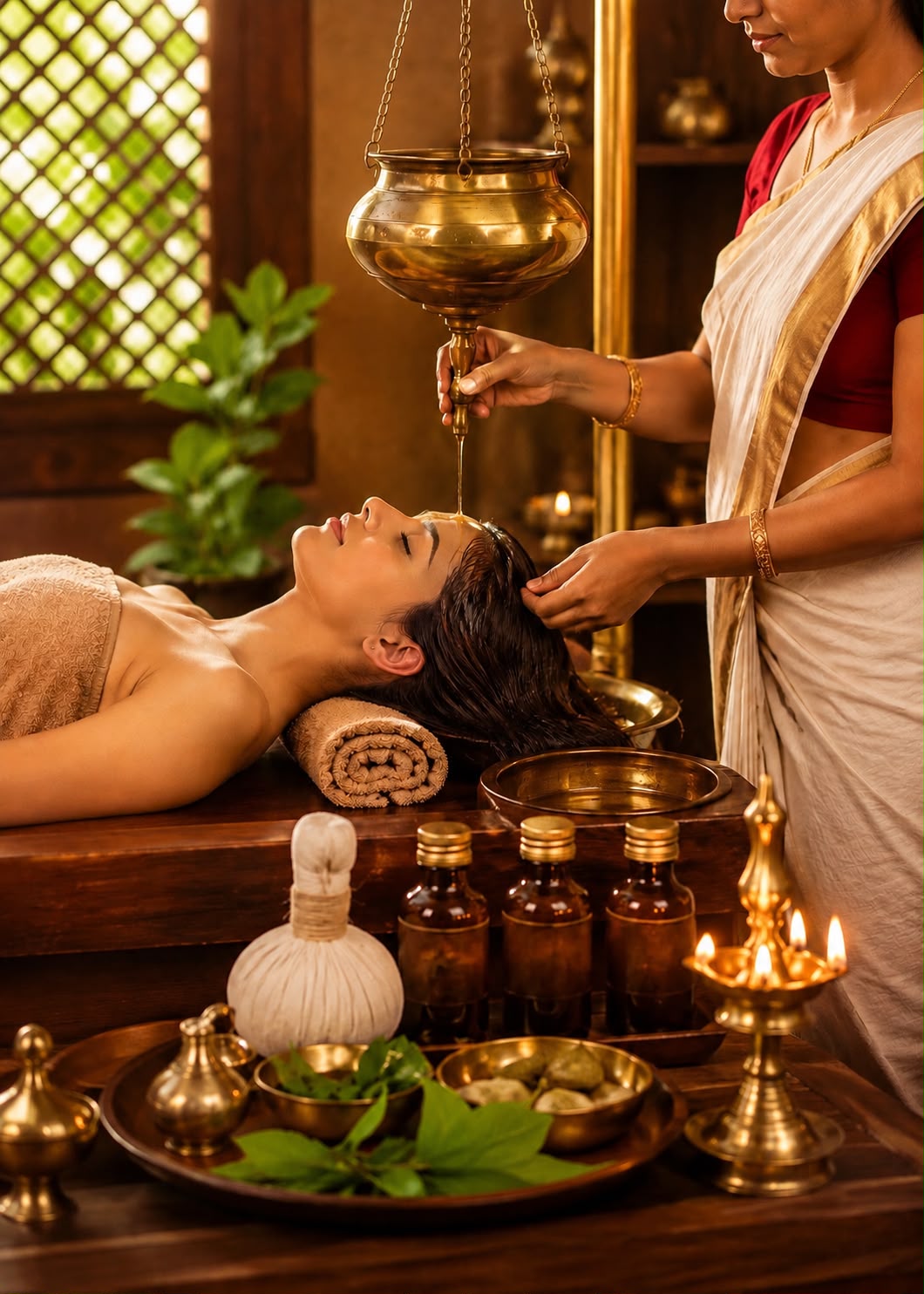
The global demand for authentic, clinically delivered Panchakarma is growing faster than the supply of qualified practitioners. The commercial dilution of the field has created an enormous reputational opportunity for doctors who choose to be genuinely trained. The Professional Diploma in Ayurveda Panchakarma program with its NSDC certification and the Certificate course in Clinical Panchakarma with Ayurveda Training Accreditation Board (ATAB) under RAV by the Ministry of AYUSH is offered by MEDMAP — with its mandatory hospital rotation and its foundation in classical procedural science from Purvakarma through Paschat Karma — is one of the most valuable investments a BAMS graduate can make in their professional future.
In a market where the word Panchakarma is printed on every spa menu and wellness app, what will distinguish you is not the certificate — it is the clinical credibility that comes from genuine training. That credibility is built in the wards and treatment rooms of a real Ayurvedic hospital, under the supervision of experienced physicians. That is exactly what the MEDMAP Ayurveda Panchakarma course provides. |
COURSE SNAPSHOT
Detail | Information |
Course Name | Professional Diploma in Ayurveda Panchakarma (PDAP) / Certificate course in Clinical Panchakarma |
Duration | 6 Months |
Mode | Hybrid — Recorded/Live Online + Mandatory 20–30 days hospital training |
Accreditation | ATAB accreditation under RAV by Ministry of AYUSH, NSDC Certified |
Eligibility | BAMS Graduates |
Clinical Competencies | Snehana (internal & external); Svedana; Vamana; Virechana; Nasya; Anuvasana & Nirooha Vasthi; Marma therapy; Agnikarma; Paschat Karma & Samsarjana Krama; Emergency protocols |
Career Pathways | Panchakarma department consultant; International Ayurveda resort; AYUSH sector; Independent clinic; Medical tourism; Faculty & research |
This article is provided by MEDMAP — a premier institution dedicated to Ayurvedic education that combines classical wisdom with contemporary clinical training. MEDMAP offers a wide range of Ayurvedic courses with hands-on clinical exposure, designed for BAMS graduates and Ayurveda practitioners at every stage of their career. 🌐 For courses, updates, and career resources, follow MEDMAP. 📱 Instagram https://www.instagram.com/ayurvedamap 🌐 Website https://medmapmedical.com |
|---|