स्तन्य (Breastmilk)- Part 1
World Breastfeeding Week · 1–7 August 2026
"Breastfeeding for a Sustainable Start in Life: Strengthen What Works" — WABA Theme 2026
Every August, the world pauses for seven days to do something that should need no campaign: support mothers who feed their babies. World Breastfeeding Week (WBW), observed from 1–7 August in more than 170 countries, was launched in 1992 by the World Alliance for Breastfeeding Action (WABA) with WHO and UNICEF. More than three decades on, the week still matters — because despite an overwhelming body of evidence establishing breastfeeding as the single most powerful preventive health intervention available to infants and mothers, global exclusive breastfeeding rates remain far below target.
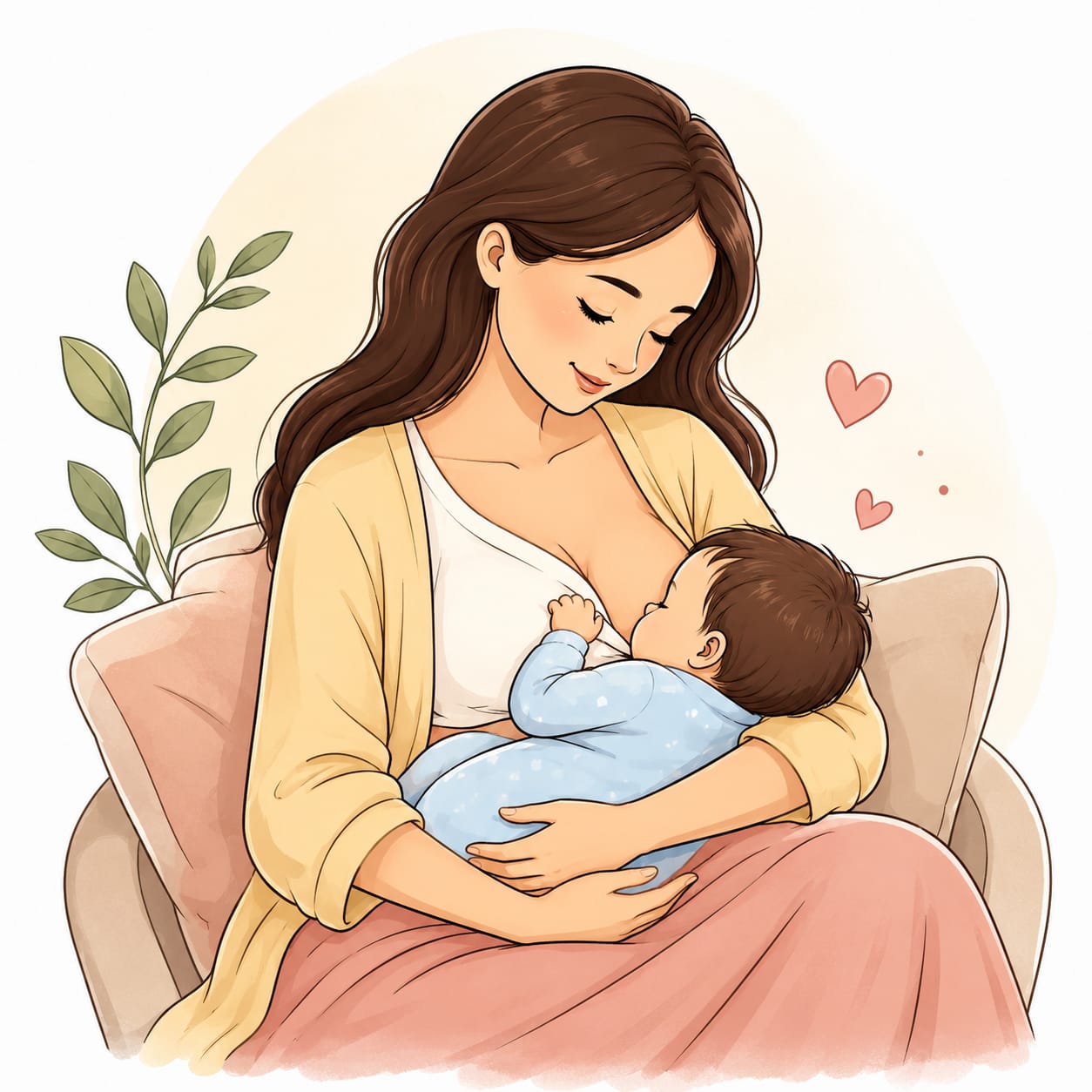
1. World Breastfeeding Week 2026 — Theme and Context
Official Theme: "Breastfeeding for a Sustainable Start in Life: Strengthen What Works" Organiser: World Alliance for Breastfeeding Action (WABA)Co-supported by: WHO, UNICEF, Ministries of Health worldwideUS National Breastfeeding Month Theme: RISEDates: 1–7 August 2026 (observed in 170+ countries) |
Unlike earlier WBW campaigns that centred on raising initial awareness, the 2026 campaign is explicitly oriented toward implementation and sustainability. The campaign asks countries to track breastfeeding progress, evaluate programme impact, and learn from what still needs to improve. It is, in effect, a global audit.
The call is timely. Progress on exclusive breastfeeding (EBF) rates remains uneven globally — limited by inadequate maternity protection laws, inconsistent hospital practices, aggressive marketing of breast-milk substitutes, and unequal access to trained lactation support. WABA's 2026 call to 'Strengthen What Works' is a recognition that the tools exist; what is needed now is political will, sustained funding, and structural support.
2. Understanding Breastfeeding — Key Terms
Exclusive Breastfeeding (EBF)
The WHO defines Exclusive Breastfeeding (EBF) as giving only breast milk — no other liquids or solids, not even water — for the first six months of life. After six months, EBF continues alongside appropriate complementary foods for two years or beyond. EBF is the gold standard of infant feeding and the benchmark against which all alternatives are measured.
Pumping and Expressed Breast Milk
Many mothers who cannot feed directly at the breast — due to work demands, preterm birth, latch difficulties, or maternal illness — choose to pump and provide expressed breast milk (EBM). Pumping, whether by electric, manual, or hands-free wearable devices, allows breast milk's benefits to be delivered by bottle while maintaining milk supply through regular expression. Pumping is not a compromise; it is a valid and valuable form of breastfeeding support.
Lactation Consultants — IBCLC
An International Board Certified Lactation Consultant (IBCLC) is a trained health professional specialising in the clinical management of breastfeeding. IBCLCs assist with latch difficulties, low milk supply, nipple pain, engorgement, mastitis, tongue-tie assessment, and pumping protocols. Evidence consistently shows that access to IBCLC support is the single most effective intervention for improving breastfeeding initiation, duration, and exclusivity. The 2026 WABA theme explicitly calls for strengthening access to such skilled, consistent, evidence-based support throughout the breastfeeding journey.
Breastfeeding Positions — Getting It Right
Correct positioning is foundational to a successful breastfeeding relationship. Poor latch is the most common cause of nipple pain, insufficient milk transfer, and early breastfeeding cessation. Evidence-based positions include:
Cradle Hold — Classic position; baby held across the body at breast level; suitable for full-term, healthy newborns
Cross-Cradle Hold — The opposite arm supports the baby; gives greater head control; recommended for newborns learning to latch
Football / Clutch Hold — Baby held under the arm, body alongside the mother; excellent for caesarean births and mothers with large breasts or twins
Side-Lying Position — Both mother and baby lie on their sides facing each other; supports night feeding and post-operative recovery
Laid-Back / Biological Nurturing — Semi-reclined mother, baby prone on chest; harnesses newborn feeding reflexes; reduces nipple pain
A good latch is characterised by: baby's mouth wide open covering both nipple and areola, chin touching the breast, nose clear, cheeks full and rounded, and audible swallowing. Any nipple pain beyond initial mild discomfort warrants assessment by a lactation consultant.
3. Why Breastfeeding Matters — The Evidence
For the Infant
Breast milk is a dynamic, living biological fluid — it changes composition across a single feed, across the day, and across months of lactation. It provides perfectly calibrated nutrition, passive immunity through secretory IgA, maternal antibodies, lactoferrin, lysozyme, and human milk oligosaccharides (HMOs) that selectively feed beneficial gut bacteria while blocking pathogen adhesion.
A systematic analysis of 147 studies from 2014–2024 found that EBF for six months reduces infant mortality by 13%, lowers the risk of sudden infant death syndrome (SIDS) by 36%, and significantly decreases gastrointestinal and respiratory infections as well as allergic diseases. Breastfed children demonstrate better cognitive development, with an average IQ advantage of 3.2 points. Long-term, EBF reduces the risk of childhood obesity, type 1 and type 2 diabetes, leukaemia, and otitis media.
A landmark 2025 metagenomic study of 525 Brazilian infants (Germina Cohort, 3–9 months) confirmed that EBF directly shapes gut microbiome maturation — EBF infants had a microbiome age closer to their chronological age, indicating healthier developmental trajectory. Machine learning analysis identified Escherichia coli, Ruminococcus gnavus, and Clostridium neonatale as key EBF predictors, alongside vitamin K and o-antigen metabolic pathways. Ref: Exclusive breastfeeding is associated with gut microbiome maturation in infants according to delivery mode. PMC12005435, 2025. |
For the Mother
Breastfeeding confers substantial health benefits for mothers — benefits that are frequently under emphasised in public communication. These include: faster uterine involution (via oxytocin release), reduced postpartum haemorrhage, accelerated return to pre-pregnancy weight, reduced risk of premenopausal breast cancer, reduced risk of ovarian cancer, lower lifetime risk of type 2 diabetes and metabolic syndrome, and reduced risk of postpartum depression through sustained oxytocin release during feeds.
For Society
Breastfeeding is the most cost-effective public health intervention available. It reduces the global burden of paediatric infectious disease, lowers childhood and adult obesity rates, reduces hospitalisation costs, and contributes to environmental sustainability by eliminating formula manufacturing, packaging, and transport. WABA estimates that suboptimal breastfeeding costs the global economy over USD 300 billion annually in preventable illness and cognitive losses.
(To be continued)
References
CLASSICAL TEXTS
1. Charaka Samhita — Sutra Sthana 4/12 (Stanya Janana and Shodhan Gana), 6/20 (Stanya as Upadhatu), 26. Acharya JT, ed. Chaukhambha Surbharati Prakashan, Varanasi.
2. Sushruta Samhita — Shareera Sthana 3/47–50 (Stanya formation), 8/56 (contraindications to breastfeeding), Sutra Sthana 46/34–35. Chaukhambha Orientalia, Varanasi.
3. Kashyapa Samhita — Khilasthana, Dhatri Lakshana chapter (wet nurse selection); Kaumarabhritya norms. Chaukhambha Sanskrit Pratishthan.
4. Ashtanga Hridayam (Vagbhata) — Uttara Tantra 2/2–5 (Stanya Dushti based on Dosha). Paradakara HS, ed. Chaukhambha Surbharati Prakashana, Varanasi.
5. WABA (World Alliance for Breastfeeding Action). World Breastfeeding Week 2026: Breastfeeding for a Sustainable Start in Life — Strengthen What Works. waba.org.my, 2026.
6. WHO. International Code of Marketing of Breast-Milk Substitutes: Frequently Asked Questions. 2022 Update. who.int.
7. La Leche League International. World Breastfeeding Week 2026. llli.org/wbw-2026/
8. Systematic analysis of 147 studies (2014–2024): The Importance and Benefits of Breastfeeding. Web of Journals, 2024. DOI: 10.5281/webofjournals.
9. PMC meta-analysis: The Risks of Not Breastfeeding for Mothers and Infants. PMC2812877. Reviews in Obstetrics and Gynecology.
10. Gut microbiome and EBF maturation: Exclusive breastfeeding is associated with the gut microbiome maturation in infants according to delivery mode. PMC12005435, 2025. Taylor & Francis.
11. Frontiers in Microbiology (2023): A health-promoting role of EBF on infants through restoring delivery mode-induced gut microbiota perturbations. DOI: 10.3389/fmicb.2023.1163269.
12. Birla A. et al. Postpartum use of Shavari Bar® (Shatavari formulation) improves breast milk output: a double-blind, prospective, randomized, controlled clinical study. PMC9375125.
13. Mulla SA., Patil S., Bankapure S. Randomised comparative clinical trial: Yastimadhu Churna and Shatavari Churna in Stanyakshaya. Int Ayurved Med J, 2024;12(1). DOI: 10.46607/iamj112012024.
14. Kamble S. et al. Comparative study of Shrungataka Churna and Vidarikand Churna in Stanyakshaya. World J Pharm Res, 2017;6(9):1–10.
15. JAIMS Review: Herbal Galactogogues for Post Partum Lactation: A Review. JAIMS, 2025. jaims.in/jaims/article/view/4473.
16. Medindia. World Breastfeeding Week 2026 — A Healthier Start for Every Baby. medindia.net, 2026.
This article is for educational purposes only.
For personalised breastfeeding support, consult a qualified IBCLC-certified lactation consultant, BAMS/MD Ayurveda physician, or your obstetric healthcare team.
This article is provided by MEDMAP — a premier institution dedicated to Ayurvedic education that combines classical wisdom with contemporary clinical training. MEDMAP offers a wide range of Ayurvedic courses with hands-on clinical exposure, designed for BAMS graduates and Ayurveda practitioners at every stage of their career. 🌐 For courses, updates, and career resources, follow MEDMAP on all platforms. 📱 Instagram https://www.instagram.com/ayurvedamap 🌐 Website https://medmapmedical.com |
|---|