1. Introduction
Chyavanaprasha (CP) stands as arguably the most celebrated and clinically documented compound Rasayana formulation in the entire Ayurvedic pharmacopoeia. Described as a synergistic blend of over fifty medicinal herbs, herbal extracts, ghee, honey, sesame oil, and sugar with a characteristic jam-like consistency, it has been in continuous use for an estimated three to four thousand years across the Indian subcontinent.
Chyawanprash possesses rich nutraceutical value along with potential antioxidant, anti-inflammatory, and immunomodulatory properties; hence, its daily intake strengthens the immune system and protects all year long.
From ancient royal courts to modern kitchen shelves, Chyavanaprasha has traversed millennia largely intact, offering one of the most vivid examples of documented pharmacological continuity in medical history.
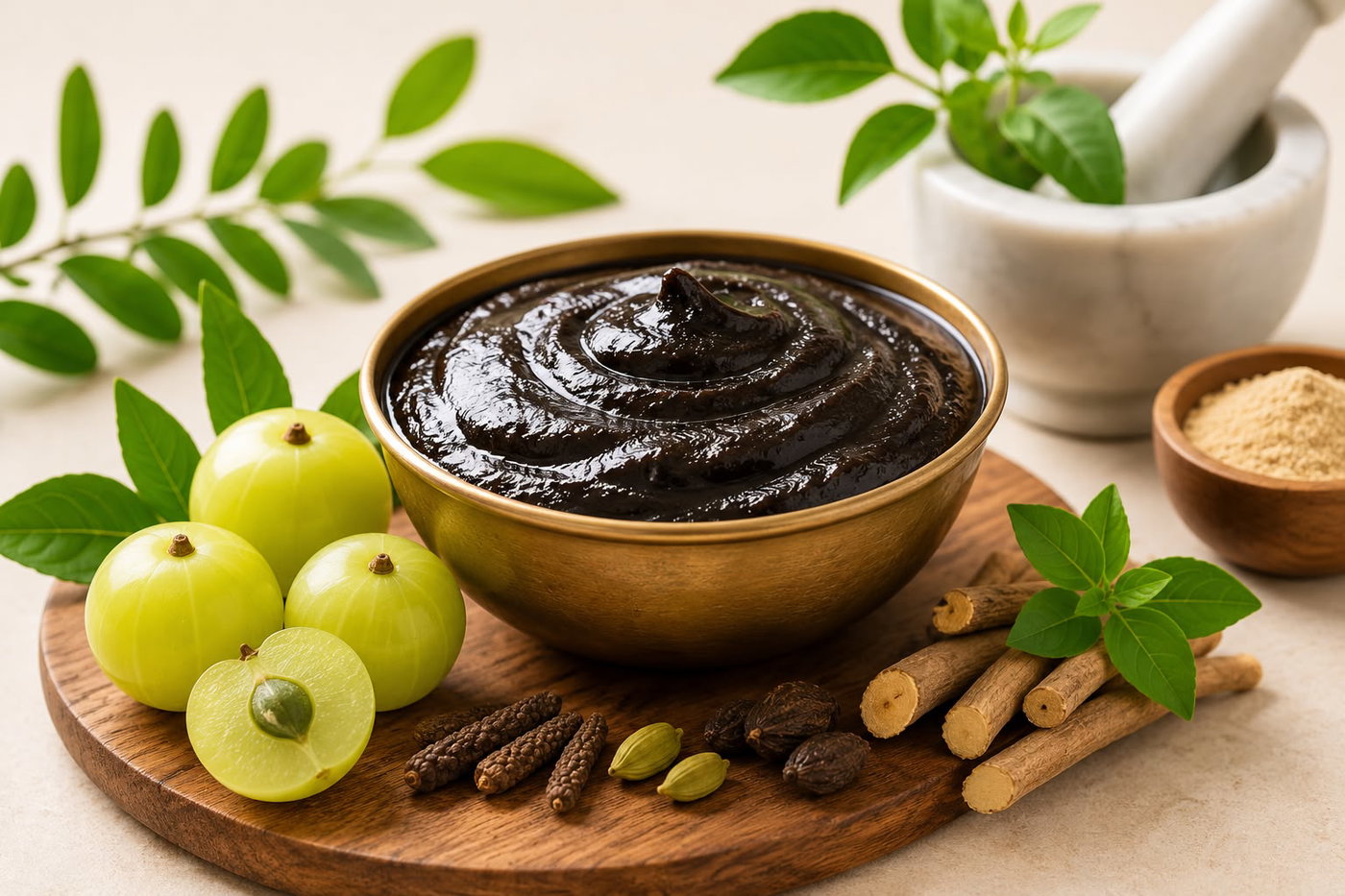
2.1 Etymology
The name is a Sanskrit compound of two words:
Chyavana (च्यवन) — the name of the ancient Vedic sage for whom this formulation was originally prepared.
Prasha (प्राश) — meaning 'specially prepared food meant to be licked or consumed' in Sanskrit; it denotes the Leha/Avaleha (electuary/confection) dosage form in Ayurvedic pharmaceutics.
Together, Chyavanaprasha literally translates as 'the specially prepared confection of (for) Chyavana.' In Sanskrit, prash also connotes the act of eating or tasting something exceptional — underscoring the formulation's revered status.
2.2 The Legend of Rishi Chyavana
The origin story, one of the most celebrated in Vedic literature, is narrated in the Charaka Samhita (Chikitsa Sthana, Chapter 1), the Mahabharata (Adi Parva, Chapters 5–6), the Shatapatha Brahmana, and is referenced in the Rigveda (Mandala X, Sukta 19).
Rishi Chyavana was the son of the great sage Bhrigu. His name itself carries etymological significance: Brahma named the child Chyavana — derived from the Sanskrit root chyuta, meaning 'fallen' or 'dropped' — because he slipped prematurely from his mother Puloma's womb when a demon (rakshasa) harassed her in the hermitage. The newborn's spiritual energy (tejas) immediately incinerated the demon to ashes.
In his later years, Chyavana had spent so long in meditation that an anthill covered his body — only his eyes remained visible. Sukanya, the beautiful daughter of King Sharyati, accidentally pierced his eyes, blinding the sage. Her father, to appease Chyavana's wrath, offered Sukanya in marriage. She devoted herself to caring for the aged and blind rishi.
The divine twin physicians, the Ashwini Kumaras (described as the Rajya Vaids or State Physicians of the heavens, mentioned in the Rigveda), came to the ashram. Moved by Sukanya's devotion, they restored Chyavana's youth and vigour through a three-part Kayakalpa (rejuvenation) protocol — which included immersion in a sacred herbal pond and the administration of a specially prepared herbal confection. This confection, prepared by the Ashwinis, came to be known as Chyavanaprasha.
3. Classical Textual References
Chyavanaprasha enjoys the rare distinction of being described across all three texts of the Brihat Trayi (the three greatest classical compendiums of Ayurveda) as well as the Laghu Trayi.
Classical Text | Reference & Context |
Charaka Samhita | Chikitsa Sthana, Chapter 1 (Rasayana Pada) — Primary and most detailed reference. Describes Chyavanaprasha as the supreme Rasayana for cough, asthma, cardiac disorders, emaciation, and longevity. |
Ashtanga Hridayam | Uttara Tantra, Rasayana chapter — Describes formulation with minor variations in drug quantities; endorsed for respiratory health and Ojas building. |
Sushruta Samhita | Chikitsa Sthana — Mentions Chyavanaprasha as an important Rasayana preparation; some scholars note variations in ingredient descriptions. |
Ashtanga Sangraha | Uttara Sthana — Vagbhata includes CP as a comprehensive Rasayana formulation with emphasis on Pitta-pacifying and lung-nourishing properties. |
Sharangadhara Samhita | Madhyama Khanda — Includes CP in the Avaleha (electuary) chapter with pharmaceutical preparation guidelines. |
Bhavaprakasha Nighantu | 16th century CE — Elaborates on ingredient identification, substitution, and regional variations. |
Rasaratna Samuchchaya | Elaborated additions, including Pippali and Vidanga for enhanced bioavailability and anti-parasitic action. |
4. Ingredients
4.1 The Star Ingredient — Amalaki (Amla)
Phyllanthus emblica (Emblica officinalis) — the Indian Gooseberry — forms the structural and pharmacological backbone of Chyavanaprasha. The classical formula calls for 500 fresh Amalaki fruits (approximately 4–5 kg of pulp after processing).
Rasa (Taste): Five of the six tastes — all except salty (Lavana)
Virya: Sheeta (cooling)
Vipaka: Madhura (sweet post-digestion)
Action: Tridosha-balancing; strongest Vitamin C source in nature (up to 720 mg/100g)
Research: Demonstrated antioxidant (DPPH scavenging ~80%), immunomodulatory, hepatoprotective, and anti-ageing properties in multiple peer-reviewed studies
4.2 The Primary Herbal Decoction Group (~35 herbs)
The following herbs form the primary Kashaya (decoction) base:
Herb (Sanskrit) | Botanical Name | Primary Action |
Bilva | Aegle marmelos | Digestive, anti-diarrheal |
Agnimantha | Premna integrifolia | Deepana, anti-rheumatic |
Shyonaka | Oroxylum indicum | Anti-inflammatory, bronchodilator |
Gambhari | Gmelina arborea | Rasayana, nutritive |
Patala | Stereospermum suaveolens | Tridosha-balancing, analgesic |
Bala | Sida cordifolia | Nervine tonic, immunomodulatory |
Shalaparni | Desmodium gangeticum | Vata-pacifying, anti-fever |
Prishniparni | Uraria picta | Anti-inflammatory, Rasayana |
Mudgaparni | Phaseolus trilobus | Pitta-pacifying, Rasayana |
Mashaparni | Teramnus labialis | Vata-pacifying, nutritive |
Jeevanti | Leptadenia reticulata | Rasayana, galactagogue |
Pushkara and Pushkaramula | Inula racemosa | Respiratory tonic, bronchodilator |
Draksha | Vitis vinifera (Raisin) | Nutritive, Pitta-pacifying, Rasayana |
Kantakari | Solanum xanthocarpum | Asthma, bronchitis, anti-spasmodic |
Shati | Hedychium spicatum | Digestive, anti-inflammatory |
Punarnava | Boerhavia diffusa | Diuretic, anti-inflammatory, Rasayana |
Haritaki | Terminalia chebula | Tridosha-balancing, laxative, Rasayana |
Vibhitaki | Terminalia bellirica | Respiratory, Kapha-pacifying |
Guduchi / Giloy | Tinospora cordifolia | Immunomodulatory, anti-inflammatory |
Shatavari | Asparagus racemosus | Adaptogenic, rejuvenating, cooling |
Ashwagandha | Withania somnifera | Adaptogenic, anti-stress, Rasayana |
Brahmi | Bacopa monnieri | Medhya, nootropic, nerve tonic |
Pippali | Piper longum | Bioavailability enhancer, respiratory |
Shunti (dry ginger) | Zingiber officinale | Digestive, anti-inflammatory |
Twak (Cinnamon) | Cinnamomum zeylanicum | Aromatic, carminative |
Ela (Cardamom) | Elettaria cardamomum | Aromatic, digestive, cooling |
Tejpatra | Cinnamomum tamala | Carminative, aromatic |
Nagakeshara | Mesua ferrea | Pitta-pacifying, anti-inflammatory |
Vriddhadaru | Argyreia speciosa | Vata-pacifying, Rasayana |
Jeevaka | Ashtavarga member | Rasayana, Ojas-building (rare) |
Rishabhaka | Ashtavarga member | Rasayana (rare/threatened) |
4.3 The Ashtavarga — Eight Classical Rasayana Herbs
The Ashtavarga represents eight herbs considered the elite Rasayana ingredients in classical Ayurveda. They include: Jeevaka, Rishabhaka, Meda, Mahameda, Kakoli, Ksheer Kakoli, Riddhi, and Vridhi. Most of these are now botanically contested or critically endangered, making authentic procurement nearly impossible (see Section 8).
4.4 Base Media (Sneha, Sweeteners & Anupana)
Go-ghrita (Cow's Ghee) — Lipid carrier for fat-soluble active compounds; enhances bioavailability
Tila Taila (Sesame Oil) — Anti-inflammatory, enhances mucosal penetration
Sharkara / Khanda Sarkara (Raw sugar or unrefined cane sugar) — Preservative, energy carrier
Madhu (Pure Honey) — Added only after cooling; antimicrobial, bioavailability enhancer; NEVER to be added hot
5. Ayurvedic Properties & Pharmacodynamics
Property | Description |
Rasa (Taste) | Predominantly Madhura (sweet), Amla (sour), Tikta (bitter), Katu (pungent) — multiple tastes reflecting synergistic herbal blend |
Virya (Potency) | Ushna (warm/heating) — primarily due to Pippali and Shunti; Amla and Shatavari introduce a cooling counterbalance |
Vipaka (Post-digestion) | Madhura (sweet) — ensuring deep tissue nourishment post-absorption |
Dosha Effect | Primarily balances Vata and Kapha; neutral to mildly aggravating to Pitta in excess dose. The consumption of milk as an anupana can help in mitigating the excess pitta dosha. |
Dhatu Action | Nourishes all Sapta Dhatus (seven tissues): Rasa, Rakta, Mamsa, Meda, Asthi, Majja, Shukra |
Srotas Effect | Particularly acts on Pranavaha (respiratory), Rasavaha, Shukravaha, and Majjavaha srotas |
Primary Action | Rasayana (rejuvenating), Medhya (nootropic), Balya (strength-promoting), Ojas-vardhana (immunity building) |
6. Indications (Upayoga / Prayojana)
6.1 Classical Indications
According to Charaka Samhita (Chikitsa Sthana 1.1.62–74):
Kasa (Cough, including chronic and allergic cough)
Shwasa (Asthma and breathlessness — Tamaka Shwasa)
Hridroga (Cardiac conditions — supportive Rasayana)
Urakshat (Chest trauma and injury with emaciation)
Kshaya (Wasting disorders, including pulmonary tuberculosis-equivalent)
Vata Vikara (Neurological and musculoskeletal disorders)
Meha (Metabolic disorders, including prediabetes — with caution)
Shukra Kshaya (Spermatogenic deficiency, low libido)
Jara (General debility of old age)
Balya (For building strength and immunity in children)
Smriti Vriddhi (Enhancement of memory and cognitive function)
Chakshu (Visual health support)
6.2 Modern Clinical Indications
Recurrent respiratory tract infections (URTIs, sinusitis, bronchitis)
Hoarseness of voice
Post-viral fatigue and immune reconstitution
Paediatric nutritional supplementation (children above 2 years)
Geriatric Rasayana / anti-ageing protocol
Antenatal nutritional support (under physician guidance)
Adaptogenic support in high-stress individuals
Convalescence from chronic illness
COVID-19 prophylaxis — evaluated in 5 RCTs (see Scientific Studies section)
7. Classical Method of Preparation of Avaleha Kalpana
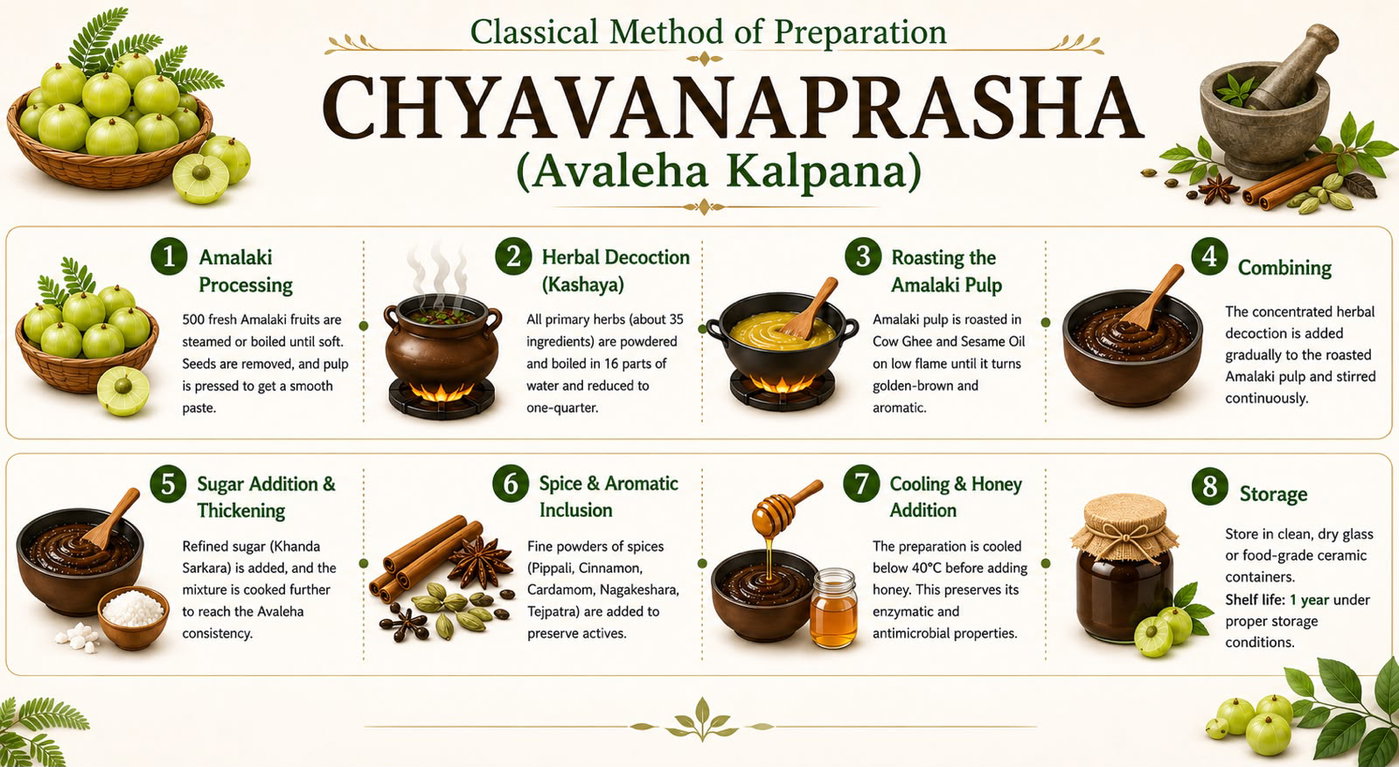
The preparation follows the classical Avaleha (electuary/confection) pharmaceutical method described in Sharangadhara Samhita (Madhyama Khanda) and aligned with Charaka Samhita guidelines:
Amalaki Processing: 500 fresh Amalaki fruits are steamed or boiled whole until soft. Seeds are removed, and pulp is pressed through a fine sieve to obtain a smooth paste.
Herbal Decoction (Kashaya): All primary herbs (approximately 35 ingredients) are coarsely powdered and boiled in 16 parts of water. The decoction is reduced slowly to one-quarter volume to concentrate active phytoconstituents.
Roasting the Amalaki Pulp: The Amalaki pulp is gently fried (roasted) in measured quantities of Cow Ghee and Sesame Oil in a heavy-bottomed vessel over low flame until it turns golden-brown and aromatic. This lipid-processing step — called Sneha Bhavana — is critical for extracting fat-soluble compounds.
Combining: The concentrated herbal decoction is added gradually to the roasted Amalaki pulp and stirred continuously over low heat.
Sugar Addition & Thickening: Refined sugar (Khanda Sarkara) is added, and the mixture is cooked further until it reaches the proper Avaleha consistency — a soft ball stage where a small sample rolled between fingers forms a non-sticky ball.
Spice & Aromatic Inclusion: Fine powders of aromatic spices (Pippali, Cinnamon, Cardamom, Nagakeshara, Tejpatra) are added at this stage to preserve volatile phytoconstituents.
Cooling & Honey Addition: CRITICAL STEP — The preparation is allowed to cool to below 40°C (body temperature) before adding honey. Adding honey to a hot preparation creates Ama (toxic metabolites) according to Ayurvedic pharmacology, a position now supported by evidence that heat degrades honey's enzymatic and antimicrobial constituents.
Storage: Stored in clean, dry glass or food-grade ceramic containers. Authentic CP does not require refrigeration due to its natural preservative matrix (sugar, ghee, honey). Shelf life: 2–3 years under proper storage conditions (If not using preservatives the ideal storage time is 1 year).
Quality Checkpoint: Authentic Chyavanaprasha is dark brown-black in colour, has a complex sweet-sour-pungent taste profile, a distinctly herbaceous aroma, and a smooth, non-gritty, spreadable consistency. Watery, overly sweet, or single-flavour profiles indicate compromised preparation. |
8. Optimal Timing and Method of Consumption
8.1 Time of Day
Can be taken in the early morning or at night as the times for administration. The rationale:
Morning administration allows absorption before the digestive system is engaged with other foods — maximising bioavailability
Morning corresponds to the Kapha-dominant period of the day (6 AM–10 AM) when the respiratory and lymphatic systems are most responsive to Rasayana action.
A dose in the night before bedtime can also be considered if the individual is suffering from Urdhvajatrugata Vikara (diseases of the head and neck region).
8.2 Standard Dosage
Age / Condition | Recommended Dose |
Children (5–14 years) | 2.5–5 g (half to one teaspoon) once or twice daily (Provided there is sufficient hunger and no digestive issues, and only under a physician's guidance) |
Adults (general use) | 5–10 g (one to two teaspoons) once or twice daily |
Geriatric / debility | 5–10 g twice daily with warm milk under physician guidance |
Specific Rasayana protocol | As advised by a BAMS/MD Ayurveda physician based on Prakriti and indication |
8.3 Anupana (Carrier/Vehicle)
Warm cow's milk — Classical and most recommended; enhances tissue nourishment (Brumhana)
Warm water — Acceptable alternative, particularly in summer or for lactose-intolerant individuals
CRITICAL: Never consume Chyavanaprasha with cold milk, cold water, or cold beverages. Cold media suppress the Agni-kindling properties of the formulation and reduce the bioavailability of fat-soluble constituents. |
8.4 Season-Specific Advice
Hemanta-Shishira (Winter, Oct–Feb): The optimal season for Rasayana administration, per classical texts.
Vasanta (Spring, Feb–Apr): Acceptable; reduce dose if Kapha symptoms arise.
Greeshma (Summer, Apr–Jun): Use with caution. The warming Virya of CP may aggravate Pitta. Take with milk or reduce the quantity.
Varsha-Sharad (Monsoon-Autumn, Jul–Oct): Appropriate; immunity-building season; standard dose.
9. Contraindications & Precautions
9.1 Absolute Contraindications
Active high fever (Jwara with Ama) — CP's Guru (heavy) quality is inappropriate during acute febrile illness
Severe uncontrolled diabetes mellitus — high sugar content (classical formula uses Sharkara) is contraindicated
Active acute diarrhoea or dysentery
Known allergy to any component ingredient (Amla, sesame, honey)
Acute inflammatory conditions with Srotorodha (channel blockage)
9.2 Relative Contraindications (Use with Medical Supervision)
Type 2 Diabetes / Prediabetes — Can use other formulations suitable for diabetic patients.
Pregnancy — Insufficient safety data in high-dose contexts; conservative use under physician guidance
Lactation — Generally considered safe in standard doses, but physician consultation is advised
Obesity (Sthaulya) — Kapha-increasing properties of the standard formula may worsen weight gain; Kapha-pacifying modifications needed
Pitta-predominant constitution with active acidity/GERD — Warming Virya may exacerbate.
Concurrent allopathic medications — Take a 30-minute gap; the honey component may theoretically alter drug absorption
9.3 Who Should NOT Consume Without Physician Clearance
Individuals with diagnosed kidney disease (high potassium content of Amla)
Patients on immunosuppressive medications post-transplant (immunostimulant properties)
Individuals on blood-thinning medication (warfarin) — Amla affects coagulation parameters
Children under 2 years of age
Those with active autoimmune flares
10. Scientific Research & Clinical Evidence
Modern scientific investigation of Chyavanaprasha has grown substantially over the past two decades, spanning in vitro studies, animal models, observational trials, and randomised controlled trials (RCTs).
Study 1 — Critical Review of Clinical Trials (BHU Varanasi, 2022)
This comprehensive review from Banaras Hindu University's Department of Rasashastra confirmed that CP possesses rich nutraceutical value with antioxidant, anti-inflammatory, and immunomodulatory properties. The review critically assessed all available RCT data, noting that while traditional evidence is robust, high-quality human clinical trials remain limited, calling for larger multi-centre studies.
Study 2 — COVID-19 Prophylaxis Meta-Analysis (Cureus, 2024)
This landmark PRISMA-compliant meta-analysis screened 1,008 articles, selected 5 RCTs, and analysed 153,343 participants. The odds ratio for COVID-19 positivity in CP users vs. controls was 0.45 (95% CI 0.06–3.08), suggesting a trend towards prophylactic benefit. The study found an acceptable safety profile with no significant adverse event difference (OR 0.94, 95% CI 0.63–1.40). The authors concluded CP shows potential as a complementary prophylactic agent but requires larger, better-powered trials.
Study 3 — COVID-19 RCT in Healthcare Workers (CTRI, 2020–21)
This registered RCT (n=199 healthcare workers at a COVID-19 isolation ward) evaluated CP as prophylaxis. Conducted from May to September 2020 under ICMR-compliant ethics protocols, the trial formed part of the larger COVID-19 prophylaxis dataset incorporated into the 2024 meta-analysis.
Study 4 — Immunomodulatory Properties Review
Studies highlighted enhanced NK cell activity following CP administration. A randomised trial showed improved antioxidant status in athletes after 8 weeks of CP supplementation. The formulation's immunomodulatory action is attributed to the synergistic phytochemical matrix of Tinospora cordifolia (Guduchi), Withania somnifera (Ashwagandha), Bacopa monnieri (Brahmi), and the high polyphenol content of Amla.
Study 5 — Review of Therapeutic Benefits (PubMed, 2017)
This PubMed-indexed review corroborated CP's therapeutic benefits documented in classical literature and noted that while clinical evidence supports its immunomodulatory and Rasayana properties, high-quality RCTs with larger sample sizes and longer follow-up are needed for definitive clinical guidance.
Scientific Consensus (2024): Chyavanaprasha is supported by strong traditional evidence and growing clinical data, particularly for immunity and respiratory health. It is safe in standard doses for most populations. Standardisation of commercial preparations and larger multi-centre RCTs remain the most pressing scientific priorities. |
References
Charaka Samhita — Chikitsa Sthana, Chapter 1 (Rasayana Pada), Shloka 62–74. Translated by P.V. Sharma, Chaukhambha Orientalia, Varanasi.
Ashtanga Hridayam (Vagbhata) — Uttara Tantra, Rasayana Adhyaya. Translated by KR Srikanta Murthy, Krishnadas Academy, Varanasi.
Sushruta Samhita — Chikitsa Sthana, Rasayana chapter. Translated by KM Bhishagratna.
Sharangadhara Samhita — Madhyama Khanda, Avaleha chapter. Chaukhambha Orientalia, Varanasi.
Bhavaprakasha Nighantu (Bhavamishra, 16th century CE) — Haritakyadi Varga.
Ayurvedic Pharmacopoeia of India (API) — Part I, Volume I. Ministry of AYUSH, Government of India.
Ayurvedic Formulary of India (AFI) — Volume I. Ministry of AYUSH, Government of India.
Mahabharata — Adi Parva, Chapters 5–6. Critical Edition, BORI, Pune.
Rigveda — Mandala X, Sukta 19. Griffith translation with Sanskrit commentary.
Sharma R., Kakodkar P., Kabra A., Prajapati PK. (2022). Golden Ager Chyawanprash with Meager Evidential Base from Human Clinical Trials. Evidence-Based Complementary and Alternative Medicine, 2022:9106415. DOI: 10.1155/2022/9106415. PMID: 35237330. PMCID: PMC8881180.
Sharma S., Sethuraman G., Kumari K. (2024). Safety and Efficacy of Chyawanprash as a Prophylaxis Treatment for COVID-19: A Systematic Review and Meta-Analysis of Randomized Control Trials. Cureus, 16(10):e71532. DOI: 10.7759/cureus.71532. PMCID: PMC11516766.
Narayana DBA., et al. (2017). Chyawanprash: A Review of Therapeutic Benefits as in Authoritative Texts and Documented Clinical Literature. Journal of Ayurveda and Integrative Medicine, 8(3), 194-200. PMID: 27496580. PMCID: PMC5634731.
Choudhary Brahmaprakash Ayurveda RCT (2020–21). Chyawanprash for the Prevention of COVID-19 Infection Among Healthcare Workers. CTRI/2020/05/025275. MedRxiv preprint, 2021.
An Ayurvedic Medication (Chyawanprash) as a Prophylaxis for Non-Communicable Disease and Communicable Disease: Protocol for Systematic Review and Meta-Analysis. PMC10665970, 2023.
Indian Journal of Pharmacology (2020). Chyawanprash's Immunomodulatory Role — Enhanced NK Cell Activity.
WHO (2012). Guidelines for Quality Standardized Herbal Formulations. World Health Organization, Geneva.
This article is provided by MEDMAP — a premier institution dedicated to Ayurvedic education that combines classical wisdom with contemporary clinical training. MEDMAP offers a wide range of Ayurvedic courses with hands-on clinical exposure, designed for BAMS graduates and Ayurveda practitioners at every stage of their career. 🌐 For courses, updates, and career resources, follow MEDMAP on all platforms. 📱 Instagram https://www.instagram.com/ayurvedamap 🌐 Website https://medmapmedical.com |
|---|